
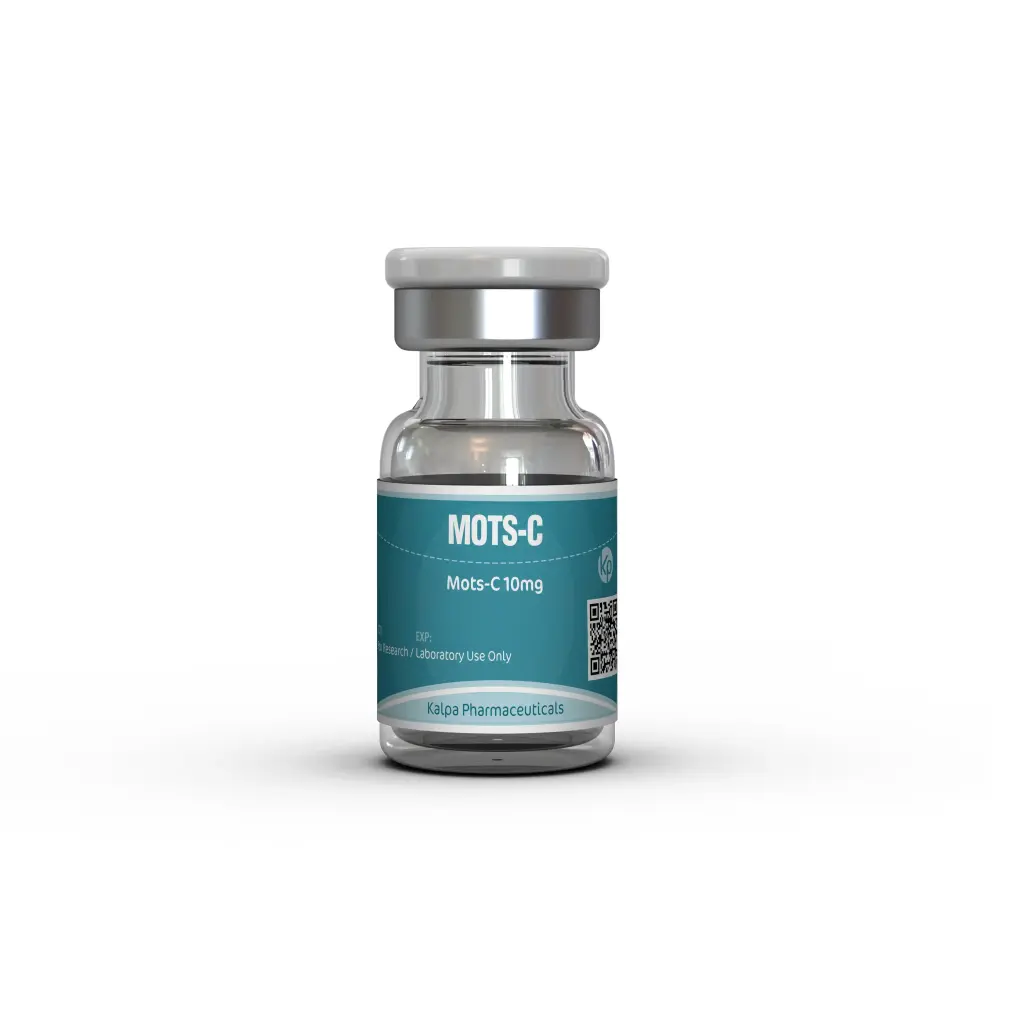
Manufacturer: Kalpa Pharmaceuticals
Pharmaceutical name: MOTS-c; Mitochondrial Peptide
Pack: vial (10 mg per vial)
⚠️ Provided in a lyophilized powder for stability
MOTS-c 10mg is a research peptide from Kalpa Pharmaceuticals LTD, India, supplied as a 10 mg lyophilized vial. The active substance is MOTS-c, also written as Mitochondrial Peptide.
Reading a study on MOTS-c can be confusing, because researchers measure it in ways that do not look alike. Some track endurance, others track blood sugar, others track how much fat is burned. All of them are looking at the same underlying question in different places.
Different labs pick different endpoints, which is why two studies on the same peptide can look unrelated at first glance. Knowing which marker a paper used tells you what it actually found.
Most work with this peptide sits in metabolic regulation, energy production and the way mitochondria respond to stress. Longevity research joined in later, because natural MOTS-c levels fall with age. All of this is laboratory research, and MOTS-c 10mg is not a medicine or a supplement for human use.
Keep the sealed vial cool, dark and dry. After mixing, store it in a fridge between 2 and 8 degrees Celsius and use it within a few weeks. Do not shake the vial. Roll it gently between your hands to mix, and work with clean tools.
Energy research usually pairs compounds that act at different stages. AICAR 50mg by Dragon Pharma switches on AMPK inside the cell, and L-Carnitine 500 by Dragon Pharma covers fat transport into the mitochondria. For other vials of the same peptide, see MOTS-c 10mg by Peptide Hubs or MOTS-c by Dragon Pharma. Everything sits in our SARMS and Peptides category.
Why do MOTS-c studies look so different from each other?
Because they measure different endpoints, from endurance to blood sugar. The peptide is the same, the marker is not.
Do I need a prescription?
No. You can buy MOTS-c 10mg without prescription from our shop.
How many amino acids does it have?
16, which makes it a peptide rather than a protein.
Adding MOTS-c 10mg to your cart takes a minute. Compare it with the Peptide Hubs and Dragon Pharma vials if you want to test makers side by side, or browse the SARMS and Peptides category for the rest of our metabolic compounds.
| Level | Amount | How often | Length | Notes |
|---|---|---|---|---|
| Research ranges | ||||
| Cautious start | 2.5 mg | 1–2 times a week | 4–6 weeks | Conservative starting point, under supervision |
| Moderate, intermittent | 5 mg | 2–3 times a week | 4–8 weeks | Range discussed most often |
| Higher frequency | 5 mg | 3–5 times a week | 4–12 weeks | Used for metabolic support or training blocks |
| 10 mg dose | 10 mg | 1–3 times a week | 4–8 weeks | "10 mg" may refer to what's in the vial, not the amount per dose |
| Key facts | ||||
| Approval status | A peptide made in the mitochondria; there is no FDA-approved dose or clinical protocol | |||
| Usual route | Injection under the skin (subcutaneous) | |||
| Sports testing | USADA lists MOTS-c as an experimental drug, so no therapeutic use exemption is possible; the WADA 2026 Prohibited List applies from January 1, 2026 | |||
| Possible side effects | Reactions at the injection spot, changes in energy, poor sleep, swings in blood sugar | |||
| Do not use if | Pregnant, breastfeeding, with a history of cancer, with organ impairment, or a tested athlete | |||
| Combining with other products | Using it together with GLP-1 drugs, stimulants, thyroid medication, or other peptides makes side effects harder to trace | |||
| Disclaimer | Figures are math conversions only; they do not confirm product quality, safety, or medical suitability | |||
| Reconstitution calculator | |
|---|---|
| Find out how much bacteriostatic water to add and how many units to draw on your syringe for your MOTS-c dose. | |
| Peptide in the vial |
mg
|
| Bacteriostatic water |
mL
|
| Dose you want |
mg
|
| Syringe |
|
| Results | |
| Choose your values and press Calculate. | |
| Concentration | — |
| Amount to draw | — |
| Units to draw | — |
| Doses in the vial | — |
| How the math works | |
| 1. Find the concentration | Divide the peptide in the vial by the water added. For example, 10 mg ÷ 2 mL = 5 mg/mL |
| 2. Work out the volume | Divide the dose by the concentration. For example, 5 mg ÷ 5 mg/mL = 1 mL |
| 3. Convert to units | On a U-100 syringe, multiply the mL by 100. For example, 1 mL = 100 units |
| 4. Check the syringe | Make sure the amount fits the syringe you are using |
| Worked example | |
| Vial | 10 mg MOTS-c |
| Water | 2 mL bacteriostatic water |
| Dose | 5 mg |
| Syringe | 100 units (1 mL) |
| Concentration | 10 mg ÷ 2 mL = 5 mg/mL |
| Amount to draw | 5 mg ÷ 5 mg/mL = 1 mL, which is 100 units on a U-100 syringe |
| Doses in the vial | 10 mg ÷ 5 mg = 2 doses |
| Vial size vs dose | |
| A vial marked "10 mg" holds 10 mg in total before it is mixed. It is not a single dose, and it does not mean you use the whole vial. The amount per dose depends on how much water you add and what your clinician prescribes. For example, 10 mg mixed with 2 mL gives 5 mg/mL, so a 2.5 mg dose is 0.5 mL, which is 50 units on a U-100 syringe. | |
| Disclaimer | |
| This tool does math conversions only. It does not choose a dose for you or confirm product quality, safety, or medical suitability. | |
Mixing a peptide takes about a minute. What people usually get wrong is what happens afterwards. Work through the steps in the guide above, then store the vial the way we lay out further down.
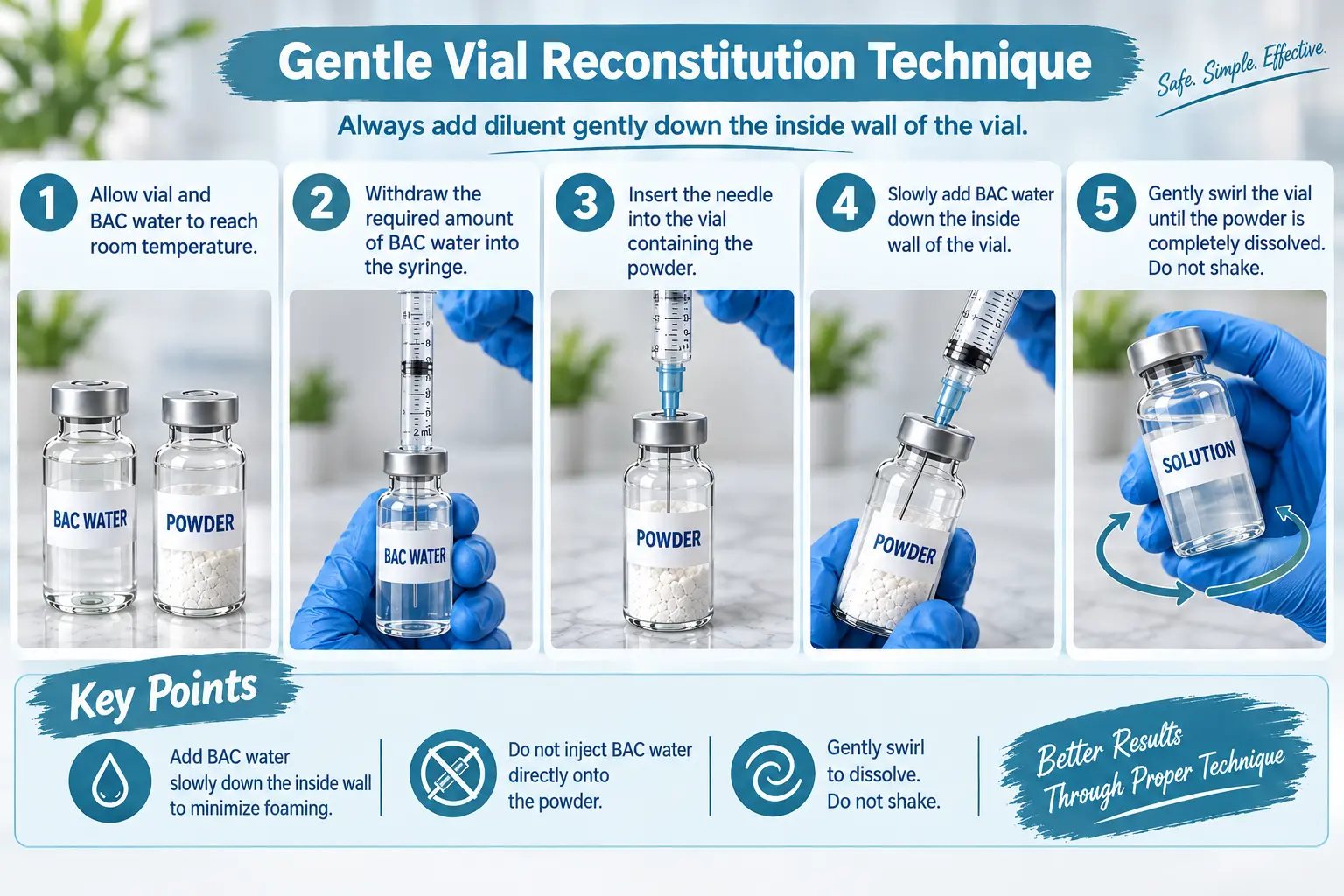
The five steps above cover it. Let the vial and the bacteriostatic water sit out until they reach room temperature. Then run the bacteriostatic water down the inside wall of the vial, slowly, so it does not foam up. Swirl it gently until the powder is gone. Do not shake the vial, and do not squirt the bacteriostatic water straight onto the powder.
As soon as it is mixed, put the vial back in the fridge. 2 to 8°C (35.6°F to 46.4°F) is what you want, and it stays there until you have used it up. Write the mixing date on the label. Do not rely on memory for that.
The dry powder is much easier to keep. Store it dry and away from light, at room temperature if it is only for a short while, or at -20°C for the long term. Only mix what you are going to use.
Please log in to write MOTS-c 10mg review.
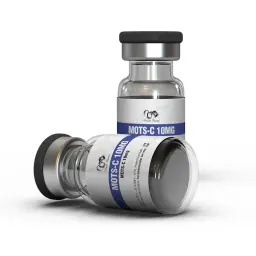
Manufacturer: Dragon Pharma
Pharmaceutical name: MOTS-c
Pack: 2 ml vial (10 mg per vial)
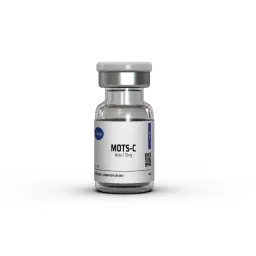
Manufacturer: Axiolabs
Pharmaceutical name: MOTS-c; Mitochondrial Peptide
Pack: vial (10 mg per vial)
⚠️ Provided in a lyophilized powder for stability
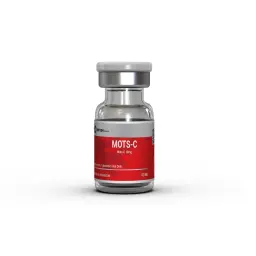
Manufacturer: British Dragon Pharmaceuticals
Pharmaceutical name: MOTS-c; Mitochondrial Peptide
Pack: vial (10 mg per vial)
⚠️ Provided in a lyophilized powder for stability