



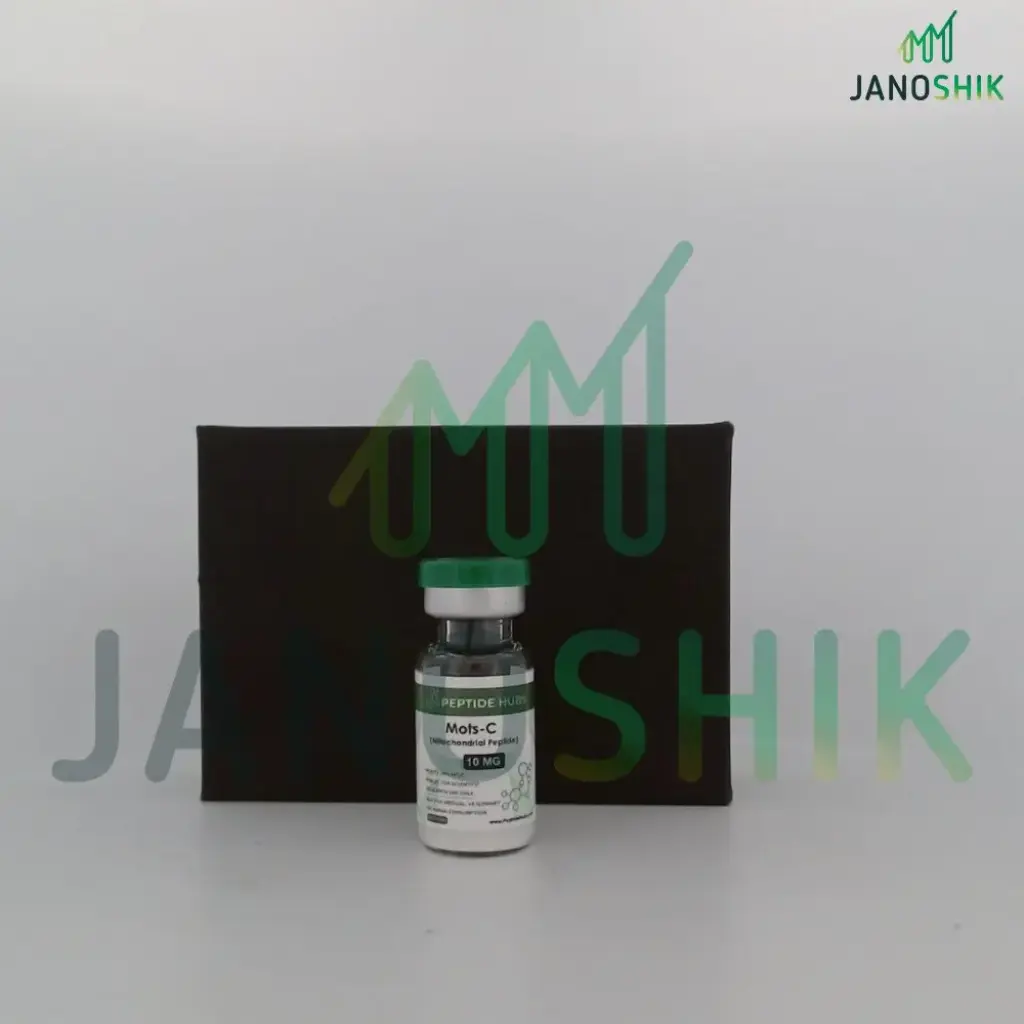
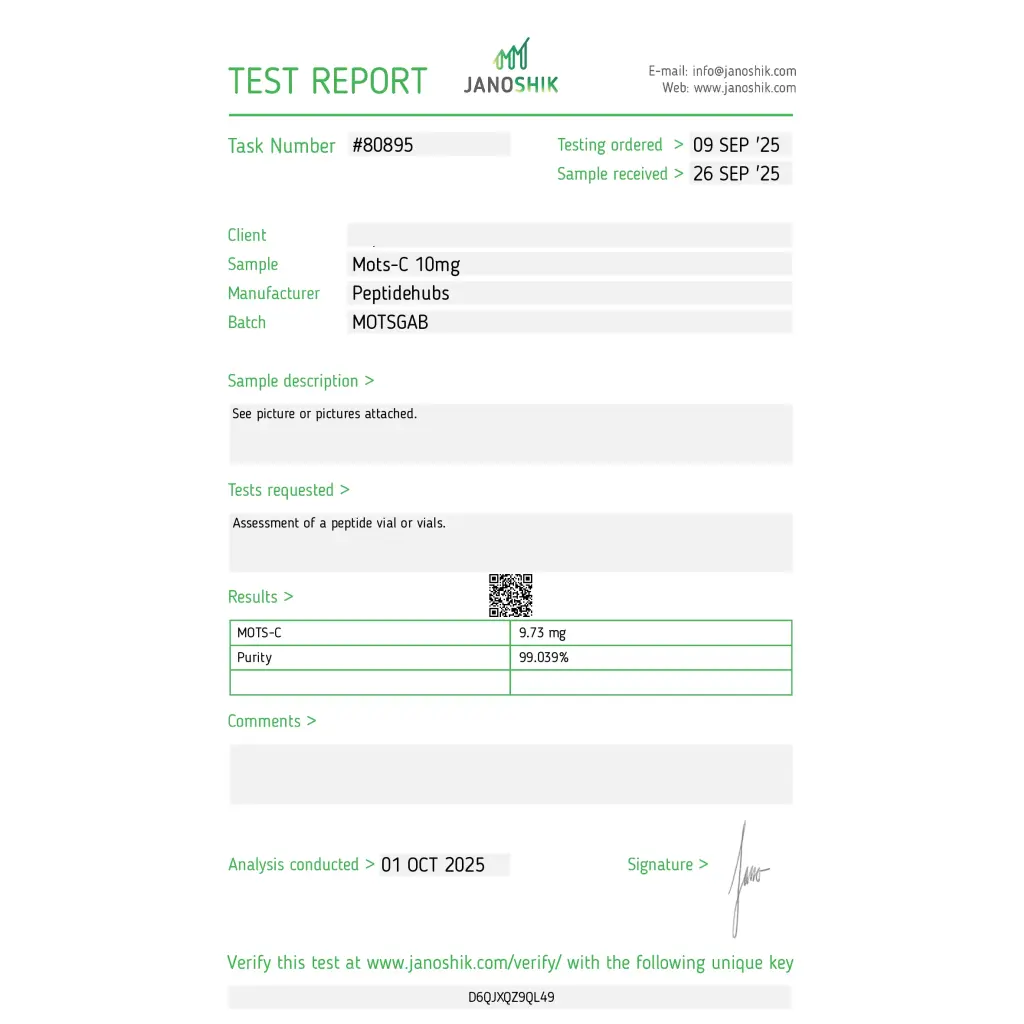
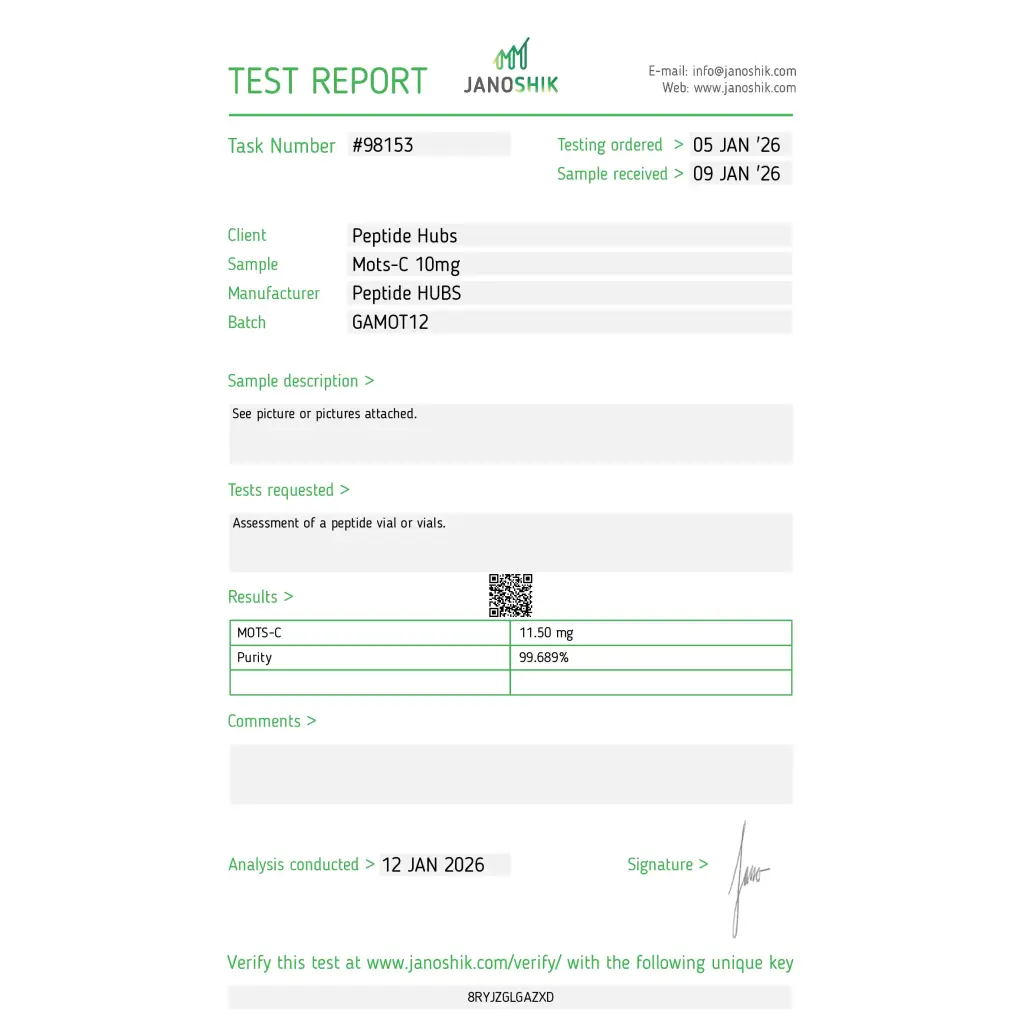
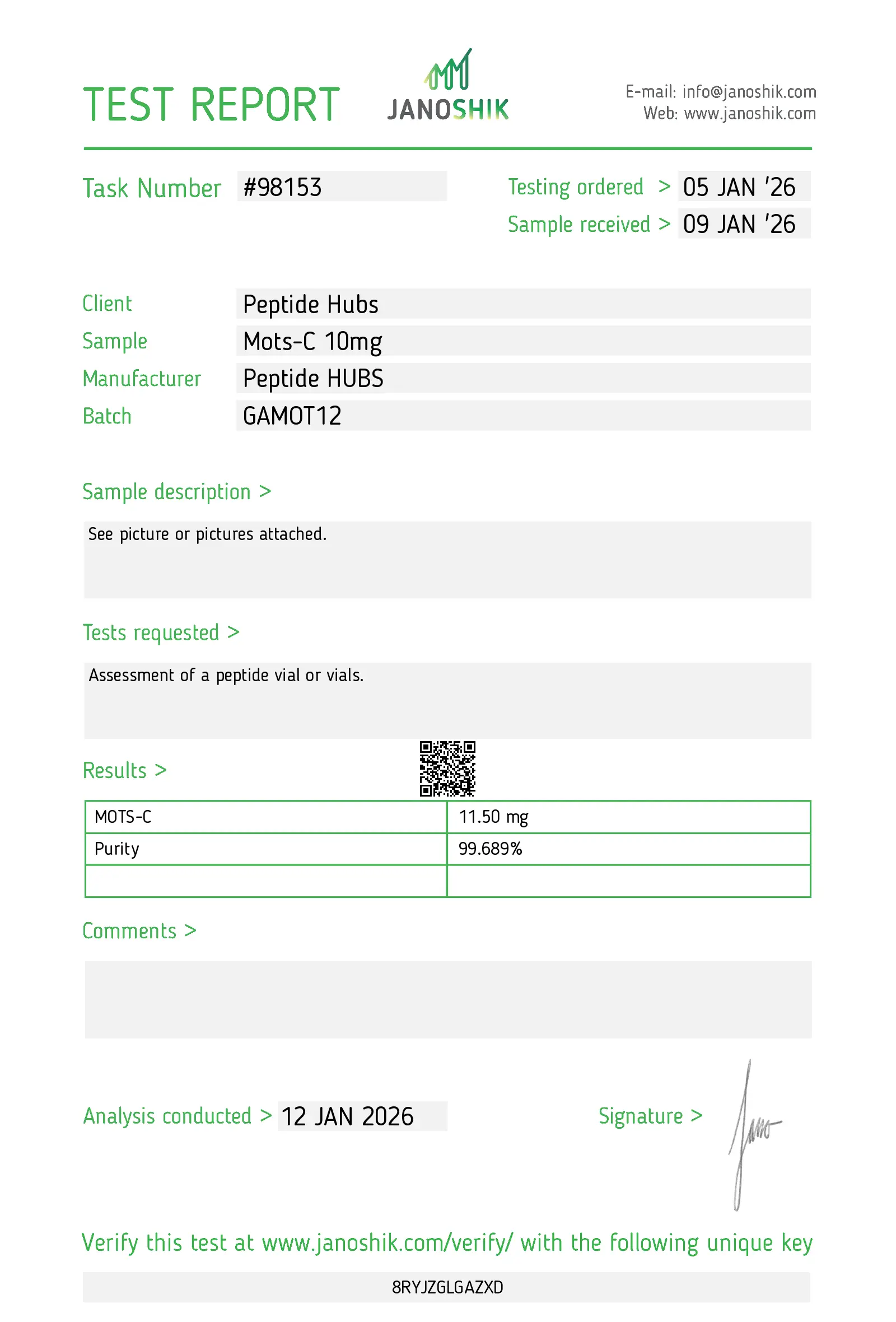
Manufacturer: Peptide Hubs
Pharmaceutical name: MOTS-c
Pack: vial (10mg)
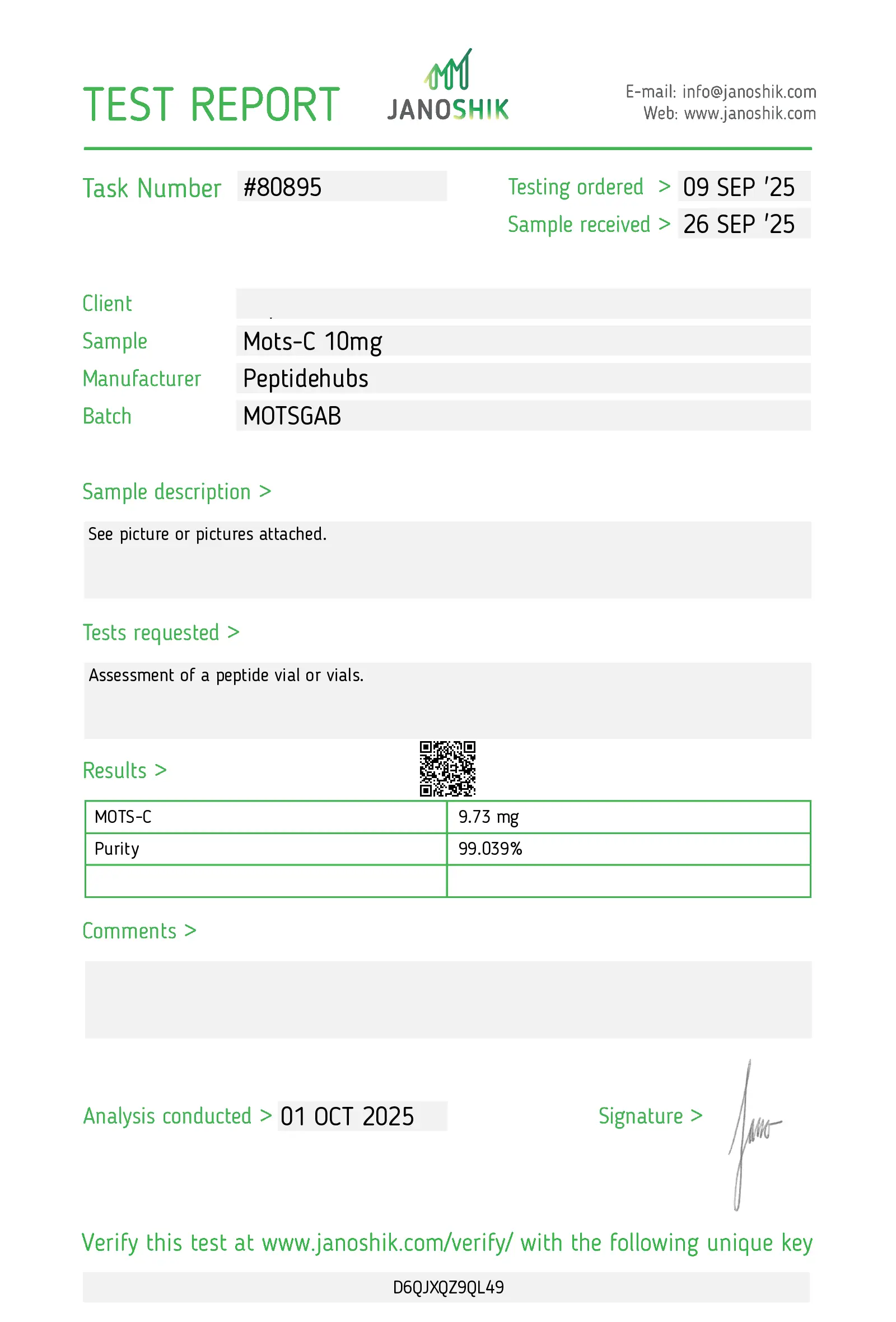
MOTS-c 10mg by Peptide Hubs is a breakthrough peptide that links athletic performance with anti-aging science. MOTS-c (Mitochondrial Open Reading Frame of the 12S rRNA type-c) is a naturally occurring mitochondrial-derived peptide that plays a critical role in energy regulation, fat metabolism, and cellular stress resistance. As we age, NAD+ and mitochondrial efficiency decline - MOTS-c helps bridge the gap, keeping metabolism youthful and performance capacity high.
For wellness seekers, MOTS-c is valued for its anti-aging properties: improved insulin sensitivity, enhanced mitochondrial health, and protection against metabolic decline. For bodybuilders, it translates to steadier energy, better fat loss, and improved recovery. Whether your goal is to look sharper, feel younger, or push harder in the gym, MOTS-c gives you a cellular advantage.
MOTS-c works at the mitochondrial level, activating AMPK and regulating metabolic pathways that affect how your body uses carbs and fats. By keeping mitochondria efficient, MOTS-c enhances energy production while reducing age-related metabolic slowdown. This dual benefit - fat loss for athletes, vitality for wellness users - makes it a peptide that spans both performance and longevity categories.
Athletes: Looking for leaner physiques, stronger recovery, and sustainable energy. Wellness users: Adults aiming to combat age-related fatigue, improve insulin sensitivity, and support long-term vitality. Hybrid users: Lifters who care about both performance and aging gracefully.
| Feature | MOTS-c | AOD 9604 | NAD+ |
|---|---|---|---|
| Primary Benefit | Metabolic regulation & energy | Targeted fat breakdown | Cellular energy & longevity |
| Best Use | Athletes & anti-aging users | Cutting & show prep | Recovery & performance support |
| Wellness Impact | High - insulin sensitivity, vitality | Moderate - fat only | High - energy & cellular repair |
| Performance Role | Fat metabolism + endurance | Leanness, not endurance | Stamina & resilience |
Yes - it supports mitochondrial health, improves insulin sensitivity, and helps preserve metabolic function with age.
Yes, by activating AMPK, it promotes fat oxidation and better metabolic flexibility during cutting or recomps.
AOD 9604 directly signals fat breakdown, while MOTS-c optimizes mitochondria and metabolism for broader benefits.
Yes - users often report sharper focus, less brain fog, and steadier mood with consistent use.
Absolutely - wellness and longevity users benefit from its anti-aging and metabolic regulation properties.
| Level | Amount | How often | Length | Notes |
|---|---|---|---|---|
| Research ranges | ||||
| Cautious start | 2.5 mg | 1–2 times a week | 4–6 weeks | Conservative starting point, under supervision |
| Moderate, intermittent | 5 mg | 2–3 times a week | 4–8 weeks | Range discussed most often |
| Higher frequency | 5 mg | 3–5 times a week | 4–12 weeks | Used for metabolic support or training blocks |
| 10 mg dose | 10 mg | 1–3 times a week | 4–8 weeks | "10 mg" may refer to what's in the vial, not the amount per dose |
| Key facts | ||||
| Approval status | A peptide made in the mitochondria; there is no FDA-approved dose or clinical protocol | |||
| Usual route | Injection under the skin (subcutaneous) | |||
| Sports testing | USADA lists MOTS-c as an experimental drug, so no therapeutic use exemption is possible; the WADA 2026 Prohibited List applies from January 1, 2026 | |||
| Possible side effects | Reactions at the injection spot, changes in energy, poor sleep, swings in blood sugar | |||
| Do not use if | Pregnant, breastfeeding, with a history of cancer, with organ impairment, or a tested athlete | |||
| Combining with other products | Using it together with GLP-1 drugs, stimulants, thyroid medication, or other peptides makes side effects harder to trace | |||
| Disclaimer | Figures are math conversions only; they do not confirm product quality, safety, or medical suitability | |||
| Reconstitution calculator | |
|---|---|
| Find out how much bacteriostatic water to add and how many units to draw on your syringe for your MOTS-c dose. | |
| Peptide in the vial |
mg
|
| Bacteriostatic water |
mL
|
| Dose you want |
mg
|
| Syringe |
|
| Results | |
| Choose your values and press Calculate. | |
| Concentration | — |
| Amount to draw | — |
| Units to draw | — |
| Doses in the vial | — |
| How the math works | |
| 1. Find the concentration | Divide the peptide in the vial by the water added. For example, 10 mg ÷ 2 mL = 5 mg/mL |
| 2. Work out the volume | Divide the dose by the concentration. For example, 5 mg ÷ 5 mg/mL = 1 mL |
| 3. Convert to units | On a U-100 syringe, multiply the mL by 100. For example, 1 mL = 100 units |
| 4. Check the syringe | Make sure the amount fits the syringe you are using |
| Worked example | |
| Vial | 10 mg MOTS-c |
| Water | 2 mL bacteriostatic water |
| Dose | 5 mg |
| Syringe | 100 units (1 mL) |
| Concentration | 10 mg ÷ 2 mL = 5 mg/mL |
| Amount to draw | 5 mg ÷ 5 mg/mL = 1 mL, which is 100 units on a U-100 syringe |
| Doses in the vial | 10 mg ÷ 5 mg = 2 doses |
| Vial size vs dose | |
| A vial marked "10 mg" holds 10 mg in total before it is mixed. It is not a single dose, and it does not mean you use the whole vial. The amount per dose depends on how much water you add and what your clinician prescribes. For example, 10 mg mixed with 2 mL gives 5 mg/mL, so a 2.5 mg dose is 0.5 mL, which is 50 units on a U-100 syringe. | |
| Disclaimer | |
| This tool does math conversions only. It does not choose a dose for you or confirm product quality, safety, or medical suitability. | |
Mixing a peptide takes about a minute. What people usually get wrong is what happens afterwards. Work through the steps in the guide above, then store the vial the way we lay out further down.
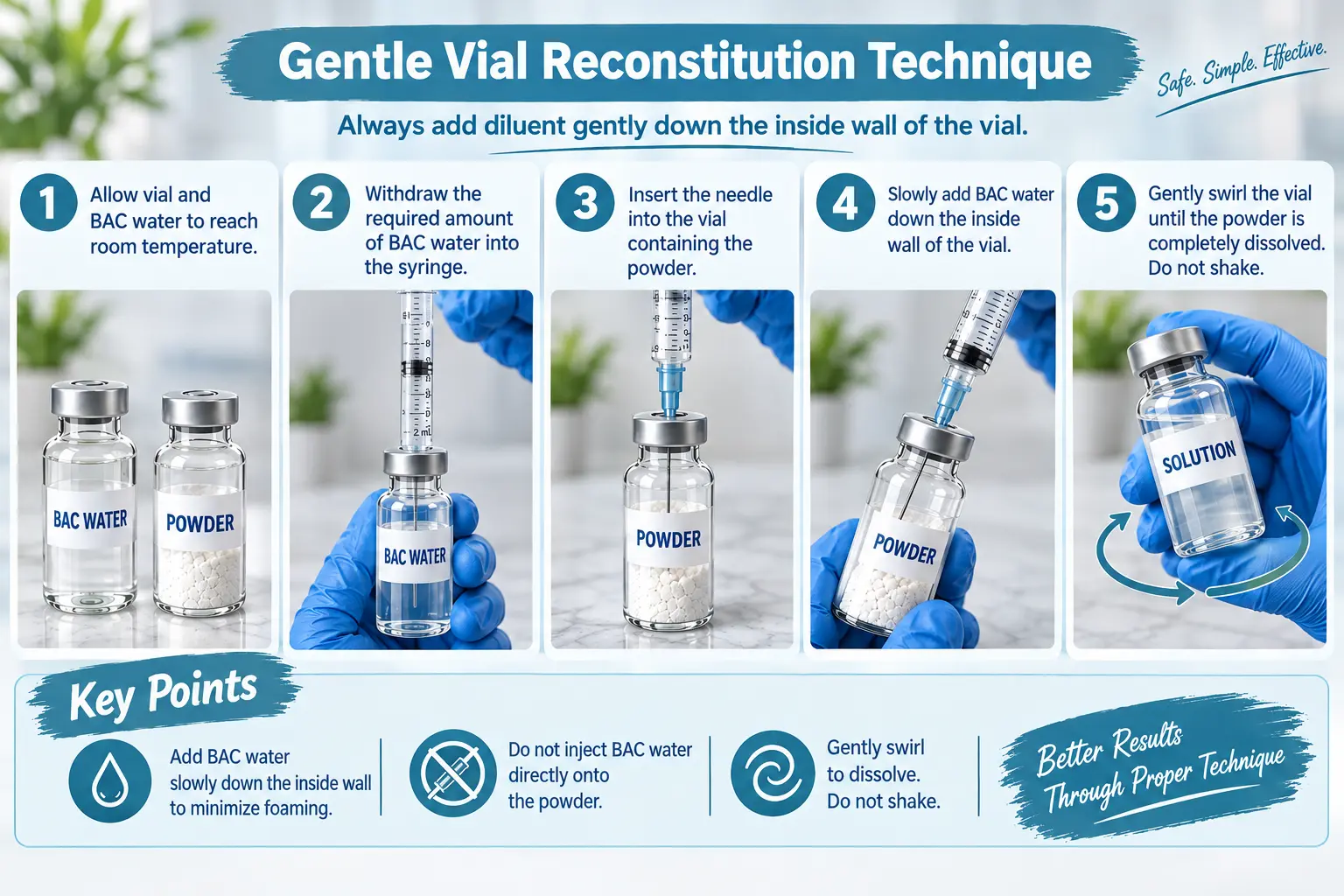
The five steps above cover it. Let the vial and the bacteriostatic water sit out until they reach room temperature. Then run the bacteriostatic water down the inside wall of the vial, slowly, so it does not foam up. Swirl it gently until the powder is gone. Do not shake the vial, and do not squirt the bacteriostatic water straight onto the powder.
As soon as it is mixed, put the vial back in the fridge. 2 to 8°C (35.6°F to 46.4°F) is what you want, and it stays there until you have used it up. Write the mixing date on the label. Do not rely on memory for that.
The dry powder is much easier to keep. Store it dry and away from light, at room temperature if it is only for a short while, or at -20°C for the long term. Only mix what you are going to use.
Please log in to write MOTS-c 10mg review.
Manufacturer: Dragon Pharma
Substance: Cagrilintide
Pack: vial (10mg)

Manufacturer: Dragon Pharma, Europe
Substance: Boldenone Undecylenate
Pack: 10ml vial (300mg/ml)

Manufacturer: Dragon Pharma, Europe
Substance: Drostanolone Propionate
Pack: 10ml vial (100mg/ml)