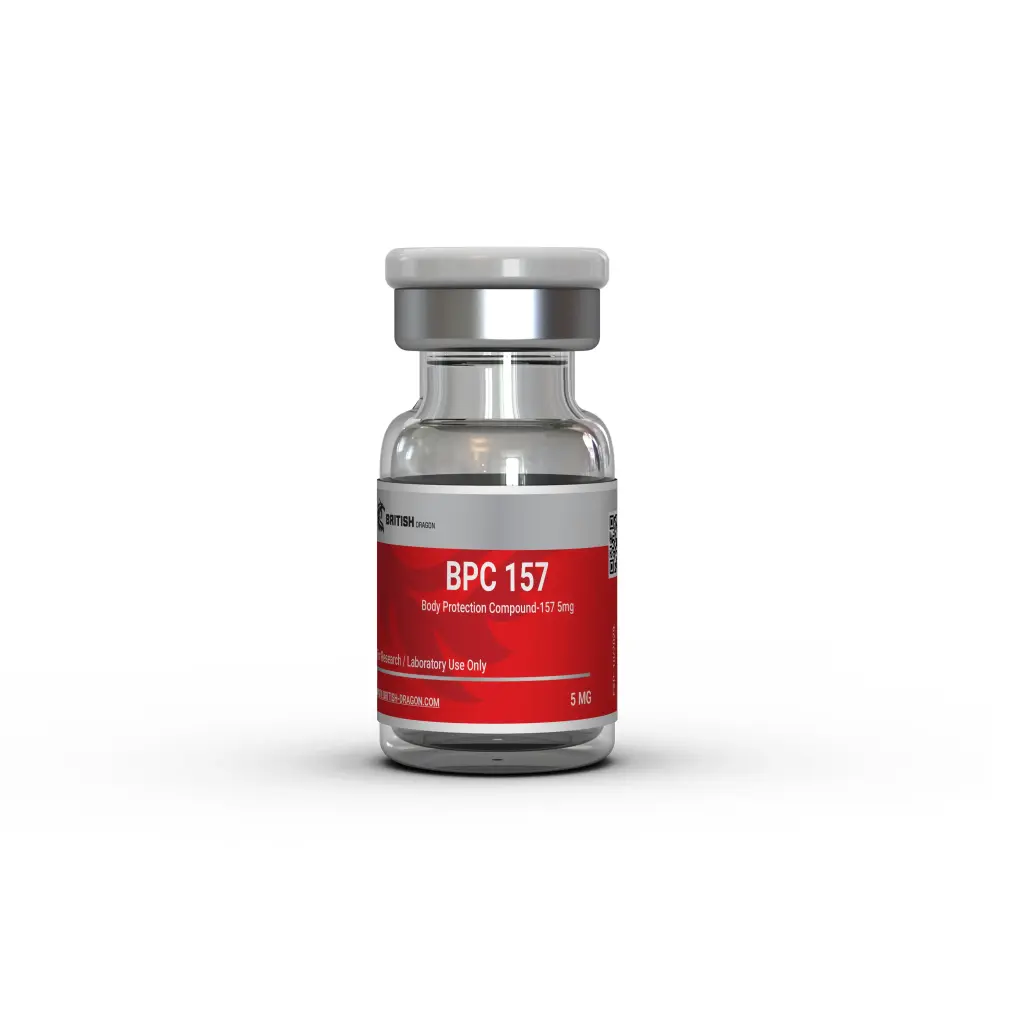
BPC 157
SARMS and Peptides
BPC 157

Manufacturer: British Dragon Pharmaceuticals
Pharmaceutical name: Pentadecapeptide
Pack: vial (5 mg)
⚠️ Provided in a lyophilized powder for stability

$24.00 $40.00
Shipping :
International
U.S. Domestic
Out of stock

BPC 157 by British Dragon - Local vs Systemic Healing Explained

BPC 157 (Body Protection Compound 157) is a synthetic pentadecapeptide widely researched for its role in tissue repair, angiogenesis, and cytoprotection. One of the most frequently discussed aspects of BPC 157 is how it behaves in local versus systemic contexts. Understanding this distinction is essential when analyzing its mechanism of action and comparing it to other recovery peptides.

Unlike some peptides that primarily act systemically, BPC 157 has been observed in preclinical models to exert strong localized effects at sites of tissue injury. At the same time, it also demonstrates broader systemic activity, influencing vascular function and cellular repair processes throughout the body.

Important medical note: BPC 157 is not widely approved for general medical use and is considered a research compound in many regions. Any application should be supervised by a qualified healthcare professional where legally permitted.

What Is Localized Healing?

Localized healing refers to biological activity concentrated at or near a specific area of tissue damage. In research discussions, BPC 157 is often associated with targeted repair due to its ability to interact with injured tissues directly.

Local effects studied include:
• Accelerated tendon and ligament repair
• Enhanced collagen synthesis at injury sites
• Increased angiogenesis in damaged tissue
• Improved tissue integrity and strength

Because connective tissues often have limited blood supply, localized stimulation of healing pathways can be particularly important for recovery.

What Is Systemic Healing?

Systemic healing involves effects that occur throughout the entire body rather than in a single targeted area. BPC 157 has also demonstrated systemic activity in research models, particularly in relation to vascular function and cytoprotection.

Systemic effects explored include:
• Support for overall vascular health
• Interaction with nitric oxide pathways
• Protection of multiple organ systems under stress
• Broad anti-inflammatory signaling

These systemic properties differentiate BPC 157 from peptides that are exclusively localized or exclusively systemic in action.

BPC 157 vs TB-500 - Local vs Systemic Comparison

BPC 157 is frequently compared to TB-500 due to their complementary roles in recovery research.

BPC 157:
• Strong localized healing response
• Direct interaction with injured tissues
• Supports angiogenesis at damage sites

TB-500:
• Primarily systemic distribution
• Promotes cell migration across the body
• Supports widespread tissue repair

Because of these differences, BPC 157 is often discussed as a targeted repair peptide, while TB-500 is associated with systemic recovery support.

Mechanism Differences in Application Context

The distinction between local and systemic activity is closely tied to how peptides interact with biological pathways. BPC 157 influences several mechanisms that contribute to both localized and systemic effects.

Key mechanisms include:
• Angiogenesis (new blood vessel formation)
• Fibroblast activation and collagen synthesis
• Nitric oxide pathway modulation
• Cellular migration and tissue remodeling

These combined actions allow BPC 157 to function across multiple levels of the healing process.

Comparison with Other Recovery Peptides

BPC 157 is also compared with peptides such as GHK-Cu, which primarily supports skin and connective tissue repair through collagen stimulation.

While GHK-Cu is more focused on dermal and cosmetic repair, BPC 157 demonstrates broader activity in musculoskeletal and vascular healing contexts.

Comparison Table

Peptide Primary Activity Local Effects Systemic Effects
BPC 157 Tissue repair Strong Moderate
TB-500 Systemic recovery Moderate Strong
GHK-Cu Skin repair Moderate Limited


Frequently Asked Questions

1) What does local healing mean?

It refers to biological repair processes occurring at a specific injury site.

2) Does BPC 157 work locally or systemically?

Research suggests it may exhibit both localized and systemic effects.

3) Is BPC 157 similar to TB-500?

They are different peptides, with BPC 157 often associated with localized healing and TB-500 with systemic effects.

4) Why is local healing important?

Targeted repair can improve recovery in tissues with limited blood supply, such as tendons and ligaments.

5) Is BPC 157 approved for medical use?

In many regions, it is considered a research compound and not widely approved.

Level Dose size Description
Dosage levels
Low 100 mcg Conservative entry point
Moderate 250 mcg Typical amount in research settings
High 500 mcg Upper limit of the commonly cited range
Essential information
Regulatory status Sold as a research compound; no human dose has FDA approval
Half-life Undetermined; estimates differ across sources
Administration Subcutaneous injection, just beneath the skin
Dosing frequency One to two times daily
Maximum researched dose 500 mcg
Reported side effects Injection-site reactions, nausea, stomach discomfort
Please note Values are unit conversions provided for reference, not medical guidance
Reconstitution calculator
Find out how much bacteriostatic water to add and how many units to draw on your syringe for your BPC-157 dose.
Peptide in the vial
mg
Bacteriostatic water
mL
Dose you want
mcg
Syringe
Results
Choose your values and press Calculate.
Concentration —
Amount to draw —
Units to draw —
Doses in the vial —
How the math works
1. Find the concentration Divide the peptide in the vial by the water added. For example, 5 mg ÷ 2 mL = 2.5 mg/mL, which is 2,500 mcg/mL
2. Work out the volume Divide the dose by the concentration. For example, 100 mcg ÷ 2,500 mcg/mL = 0.04 mL
3. Convert to units On a U-100 syringe, multiply the mL by 100. For example, 0.04 mL = 4 units
4. Check the syringe Make sure the amount fits the syringe you are using
Worked example
Vial 5 mg BPC-157
Water 2 mL bacteriostatic water
Dose 100 mcg
Syringe 100 units (1 mL)
Concentration 5 mg ÷ 2 mL = 2,500 mcg/mL
Amount to draw 100 mcg ÷ 2,500 mcg/mL = 0.04 mL, which is 4 units on a U-100 syringe
Disclaimer
This tool does math conversions only. It does not choose a dose for you or confirm product quality, safety, or medical suitability.

Reconstitution & Storage

Mixing a peptide takes about a minute. What people usually get wrong is what happens afterwards. Work through the steps in the guide above, then store the vial the way we lay out further down.
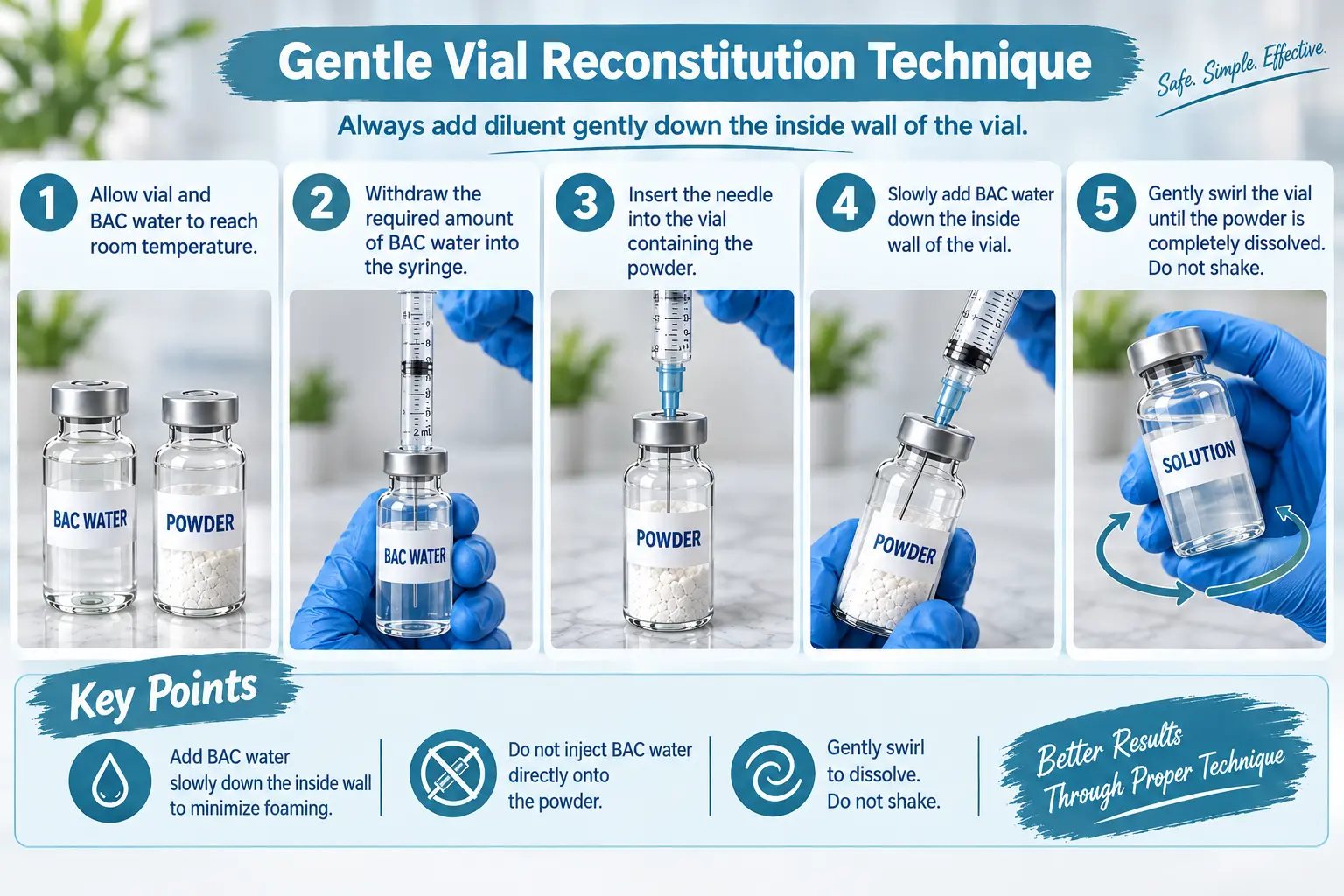
How to reconstitute peptides

How to Reconstitute

The five steps above cover it. Let the vial and the bacteriostatic water sit out until they reach room temperature. Then run the bacteriostatic water down the inside wall of the vial, slowly, so it does not foam up. Swirl it gently until the powder is gone. Do not shake the vial, and do not squirt the bacteriostatic water straight onto the powder.

How to Store the Mixed Peptide

As soon as it is mixed, put the vial back in the fridge. 2 to 8°C (35.6°F to 46.4°F) is what you want, and it stays there until you have used it up. Write the mixing date on the label. Do not rely on memory for that.

  • Temperature: an ordinary fridge, 2 to 8°C (35.6°F to 46.4°F). Not the freezer, not a kitchen cupboard.
  • How long it lasts: around 4 weeks. Anything past 28 days goes in the bin.
  • Light: keep it in the box or in a dark drawer. Light breaks peptides down.
  • Handling: wipe the stopper with an alcohol swab before each draw, use a new needle and do not shake it. Swirl if it needs a mix.
  • Freezing: never freeze a mixed solution. Ice crystals form, and a freeze and thaw cycle costs you potency.
  • Throw it out if: the liquid goes cloudy, changes colour, or you can see particles in it.

The dry powder is much easier to keep. Store it dry and away from light, at room temperature if it is only for a short while, or at -20°C for the long term. Only mix what you are going to use.

No reviews found

Please log in to write BPC 157 review.
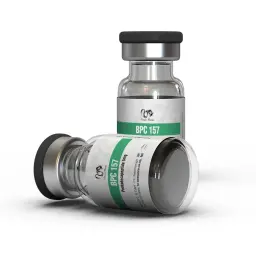
Related Offers
Domestic & International
-40% OFF
BPC 157
Dragon Pharma, Europe

Manufacturer: Dragon Pharma
Pharmaceutical name: Pentadecapeptide
Pack: 2 ml (2 mg)
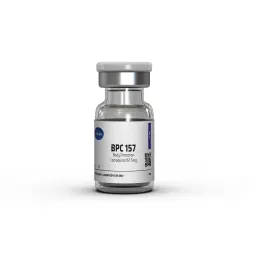
$24.00 $40.00
You will save $16.00
BPC 157
Axiolabs

Manufacturer: Axiolabs
Pharmaceutical name: Pentadecapeptide
Pack: vial (5 mg)
⚠️ Provided in a lyophilized powder for stability
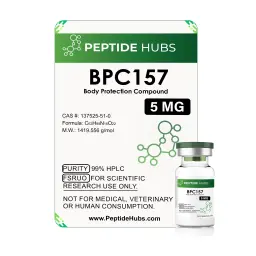
$24.00 $40.00
You will save $16.00
Out of stock
Domestic & International
-40% OFF
BPC 157
Peptide Hubs

Manufacturer: Peptide Hubs
Pharmaceutical name: Body Protective Compound 157
Pack: vial (5 mg)
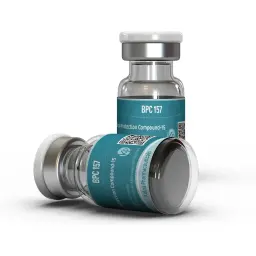
$22.80 $38.00
You will save $15.20
BPC 157
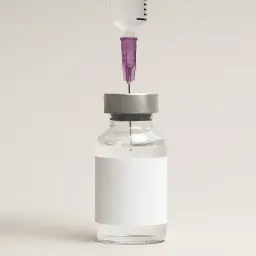
Kalpa Pharmaceuticals LTD, India

Manufacturer: Kalpa Pharmaceuticals
Pharmaceutical name: Pentadecapeptide
Pack: vial (2mg per vial)
$24.00 $40.00
You will save $16.00
Out of stock
Shipped USA Domestic
BPC157 10 mg
Stealth Labs

Manufacturer: Stealth Labs
Pharmaceutical name: Pentadecapeptide
Pack: vial (10mg per vial)

STEALTH - Shipped without label
$38.00
Out of stock
Shipped International
Shipped USA Domestic
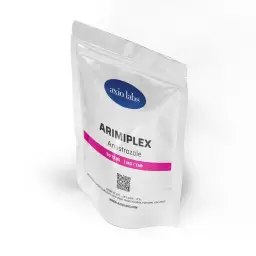
Arimiplex
Axiolabs

Manufacturer: Axiolabs
Substance: Anastrozole
Pack: 50 tabs (1 mg/tab)

$100.00
Shipped International
Shipped USA Domestic
Clomiplex
Axiolabs

Manufacturer: Axiolabs
Substance: Clomiphene Citrate
Pack: 50 tabs (50 mg/tab)

$30.80 $44.00
You will save $13.20
Out of stock
Shipped International
Shipped USA Domestic
Exeplex
Axiolabs

Manufacturer: Axiolabs
Substance: Exemestane
Pack: 20 tabs (25 mg/tab)

$88.00

Add to Cart - Product(s)

Close Button
Empty

Total Cost: