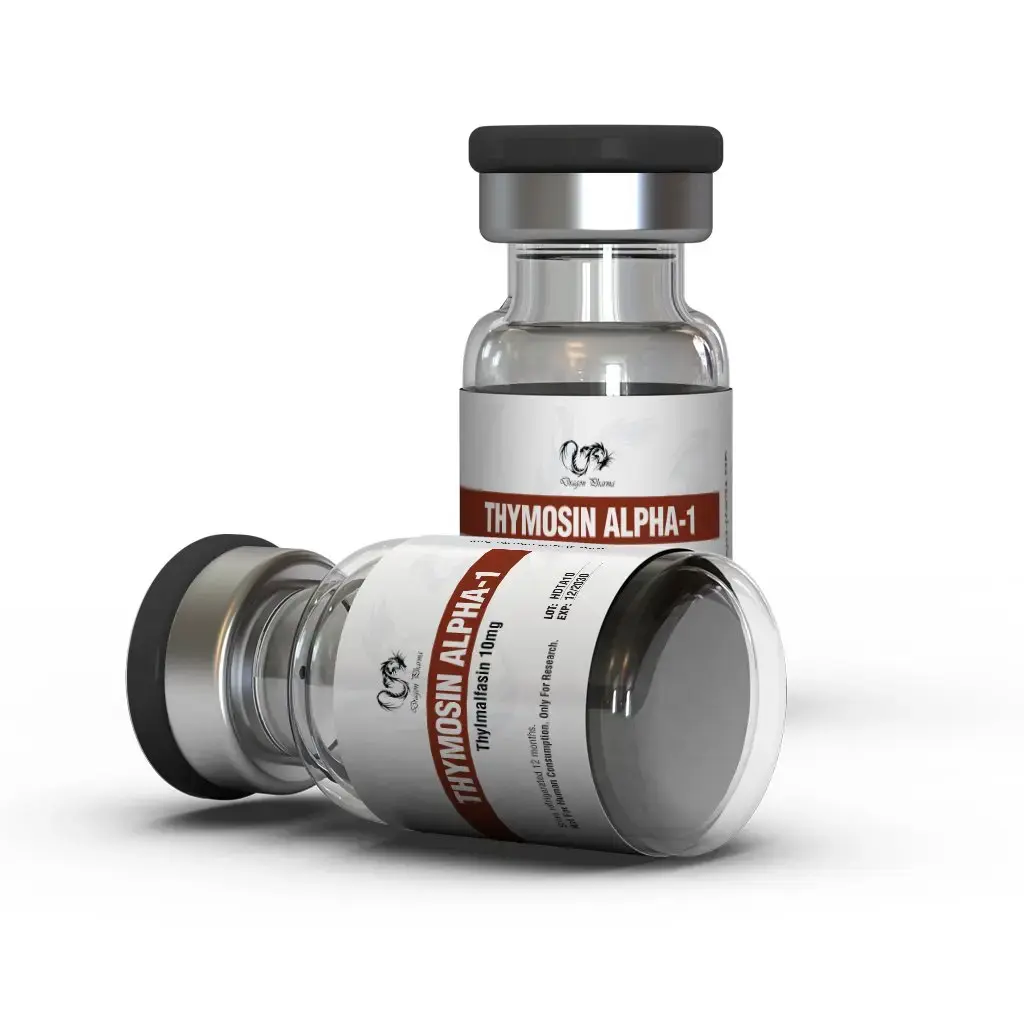
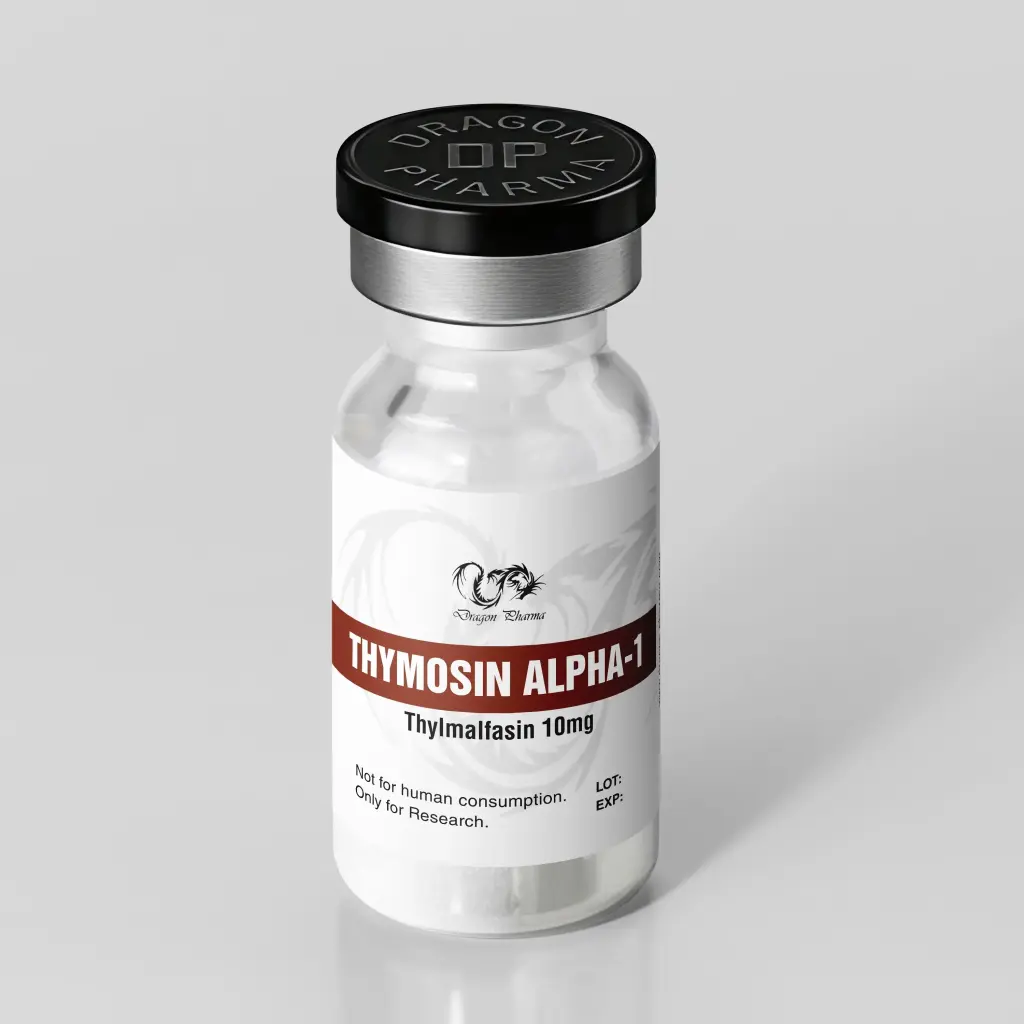
Thymosin Alpha-1 by Dragon Pharma is an immune-modulating bioregulatory peptide designed to help athletes recover faster, reduce downtime from illness, and maintain training consistency during high-volume cycles. Unlike blunt immune stimulants, Thymosin Alpha-1 acts as a smart immunomodulator - it enhances immune surveillance when needed and calms excessive inflammation when appropriate. For competitive lifters, team sport athletes, or anyone pushing frequent heavy training blocks, this means fewer missed sessions, faster healing from minor infections, and a more resilient recovery system overall.
Why Athletes Use Thymosin Alpha-1
Thymosin Alpha-1 improves innate and adaptive immune responses - helping the body identify threats faster and recover without chronic inflammation that sabotages performance. When training load increases, the immune system is stressed; this peptide helps balance that stress so you can maintain intensity, reduce nights lost to sickness, and support rapid recovery after travel or competition.
Practical Gym Benefits
• Faster return from upper-respiratory infections and shorter sick days • Reduced training interruptions during contest prep or heavy cycles • Lower chance of overtraining syndrome by supporting immune homeostasis • Improved sleep quality indirectly via reduced inflammation and better recovery signaling • Supports vaccine response in clinical contexts (use under medical guidance)
Dosage & Protocols (Athlete-Focused)
Common beginner protocol: 0.8mg every other day for 2 weeks, then reassess. Performance / travel protocol: 1.6mg twice weekly for 2-4 weeks surrounding travel, competition, or high-stress periods. Recovery protocol: 0.8-1.6mg 2-3x weekly during heavy training blocks or after illness. Inject subcutaneously into the abdomen or thigh using sterile technique. Always start conservative and adjust based on tolerance and recovery markers.
Stack Recommendations for Athletes
Thymosin Alpha-1 + BPC-157 (local repair): use when combining systemic immune resilience with targeted tendon/ligament healing. See our BPC-157 options for pairing. Thymosin Alpha-1 + MOTS-C / SS-31: couples immune resilience with mitochondrial support to preserve training capacity and reduce fatigue. Thymosin Alpha-1 + CJC-1295 DAC (recovery): for athletes wanting amplified overnight repair and systemic immune balance.
How It Feels - Real World Athlete Notes
Many users report fewer colds during heavy blocks, faster bounceback after travel, and a general sense of "holding together" when volumes are high. Unlike stimulants that mask fatigue, Thymosin Alpha-1 supports the underlying systems that actually repair tissue and reset homeostasis - the long game for athletes who compete year-round.
Comparison Table
Product
Main Focus
Strengths
Best For
Thymosin Alpha-1
Immune modulation & recovery
Reduced sick days, balanced inflammation
Athletes during heavy training / travel
BPC-157
Local tissue repair
Tendon & ligament healing
Injury & connective tissue support
MOTS-C
Mitochondrial energy
Stamina & metabolic resilience
Endurance & cutting phases
Safety & Practical Considerations
Thymosin Alpha-1 is generally well tolerated. Mild injection site soreness or temporary fatigue can occur during initial weeks. It is not a replacement for medical care - consult your physician if you have autoimmune disease or immunosuppressive therapy. Monitor recovery metrics (sleep, resting HR, training power), and adjust dosing if overstimulation or unusual symptoms appear.
Explore compatible recovery stacks and mitochondrial support:
1. What does Thymosin Alpha-1 do for athletes? It supports immune system balance, reduces time off training due to minor illness, and helps the body recover faster between sessions.
2. When should I use Thymosin Alpha-1 around competition? Begin a travel or competition protocol 1-2 weeks prior and continue 1-2 weeks after to reduce infection risk and speed recovery.
3. Can Thymosin Alpha-1 be stacked with BPC-157? Yes - Thymosin Alpha-1 supports systemic resilience while BPC-157 targets local tissue repair for a powerful recovery combination.
4. Are there any major side effects? Most users tolerate it well; possible mild injection-site soreness or transient fatigue. Consult a doctor if you have immune conditions.
5. How quickly will I notice benefits? Some athletes notice fewer infections and faster recovery within 1-3 weeks; fuller immune resilience develops over several weeks of consistent use.
Level
Dose size
Description
Dosage levels
Low
100 mcg
Conservative entry point
Moderate
250 mcg
Typical amount in research settings
High
500 mcg
Upper limit of the commonly cited range
Essential information
Regulatory status
Sold as a research compound; no human dose has FDA approval
Values are unit conversions provided for reference, not medical guidance
Reconstitution calculator
Find out how much bacteriostatic water to add and how many units to draw on your syringe for your Thymosin Alpha-1 dose.
Peptide in the vial
mg
Bacteriostatic water
mL
Dose you want
mcg
Syringe
Results
Choose your values and press Calculate.
Concentration
—
Amount to draw
—
Units to draw
—
Doses in the vial
—
How the math works
1. Find the concentration
Divide the peptide in the vial by the water added. For example, 5 mg ÷ 2 mL = 2.5 mg/mL, which is 2,500 mcg/mL
2. Work out the volume
Divide the dose by the concentration. For example, 100 mcg ÷ 2,500 mcg/mL = 0.04 mL
3. Convert to units
On a U-100 syringe, multiply the mL by 100. For example, 0.04 mL = 4 units
4. Check the syringe
Make sure the amount fits the syringe you are using
Worked example
Vial
5 mg Thymosin Alpha-1
Water
2 mL bacteriostatic water
Dose
100 mcg
Syringe
100 units (1 mL)
Concentration
5 mg ÷ 2 mL = 2,500 mcg/mL
Amount to draw
100 mcg ÷ 2,500 mcg/mL = 0.04 mL, which is 4 units on a U-100 syringe
Disclaimer
This tool does math conversions only. It does not choose a dose for you or confirm product quality, safety, or medical suitability.
Reconstitution & Storage
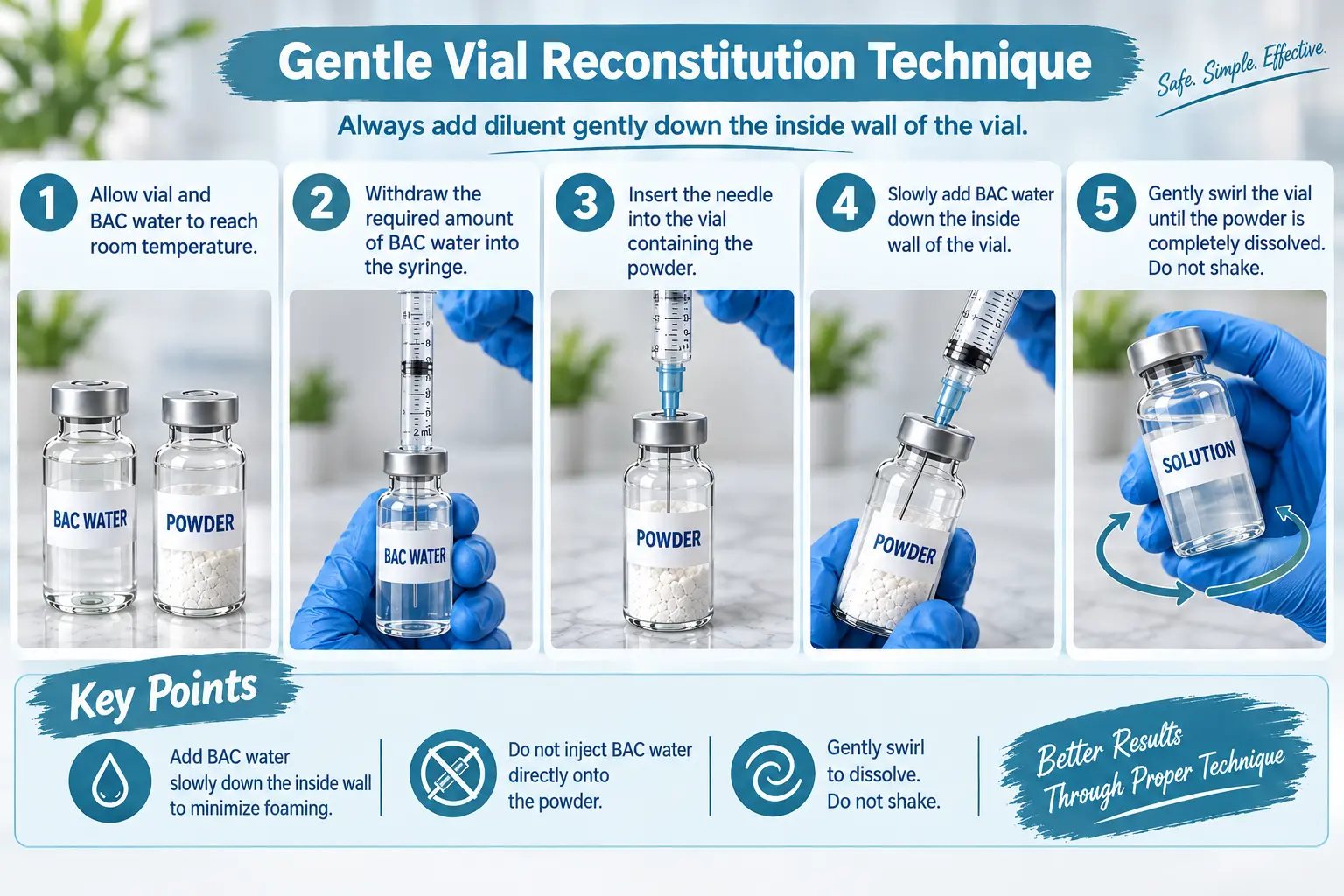
Mixing a peptide takes about a minute. What people usually get wrong is what happens afterwards. Work through the steps in the guide above, then store the vial the way we lay out further down.
How to Reconstitute
The five steps above cover it. Let the vial and the bacteriostatic water sit out until they reach room temperature. Then run the bacteriostatic water down the inside wall of the vial, slowly, so it does not foam up. Swirl it gently until the powder is gone. Do not shake the vial, and do not squirt the bacteriostatic water straight onto the powder.
How to Store the Mixed Peptide
As soon as it is mixed, put the vial back in the fridge. 2 to 8°C (35.6°F to 46.4°F) is what you want, and it stays there until you have used it up. Write the mixing date on the label. Do not rely on memory for that.
Temperature: an ordinary fridge, 2 to 8°C (35.6°F to 46.4°F). Not the freezer, not a kitchen cupboard.
How long it lasts: around 4 weeks. Anything past 28 days goes in the bin.
Light: keep it in the box or in a dark drawer. Light breaks peptides down.
Handling: wipe the stopper with an alcohol swab before each draw, use a new needle and do not shake it. Swirl if it needs a mix.
Freezing: never freeze a mixed solution. Ice crystals form, and a freeze and thaw cycle costs you potency.
Throw it out if: the liquid goes cloudy, changes colour, or you can see particles in it.
The dry powder is much easier to keep. Store it dry and away from light, at room temperature if it is only for a short while, or at -20°C for the long term. Only mix what you are going to use.