


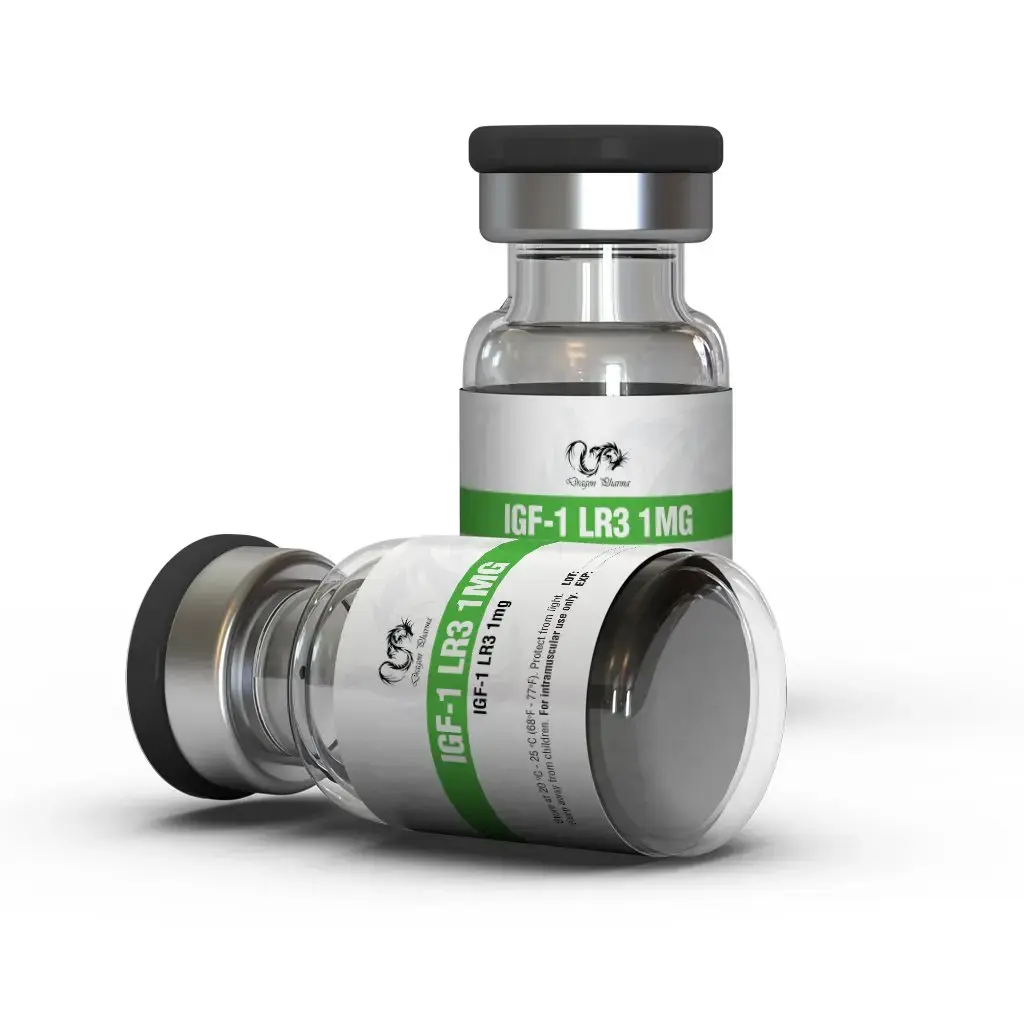
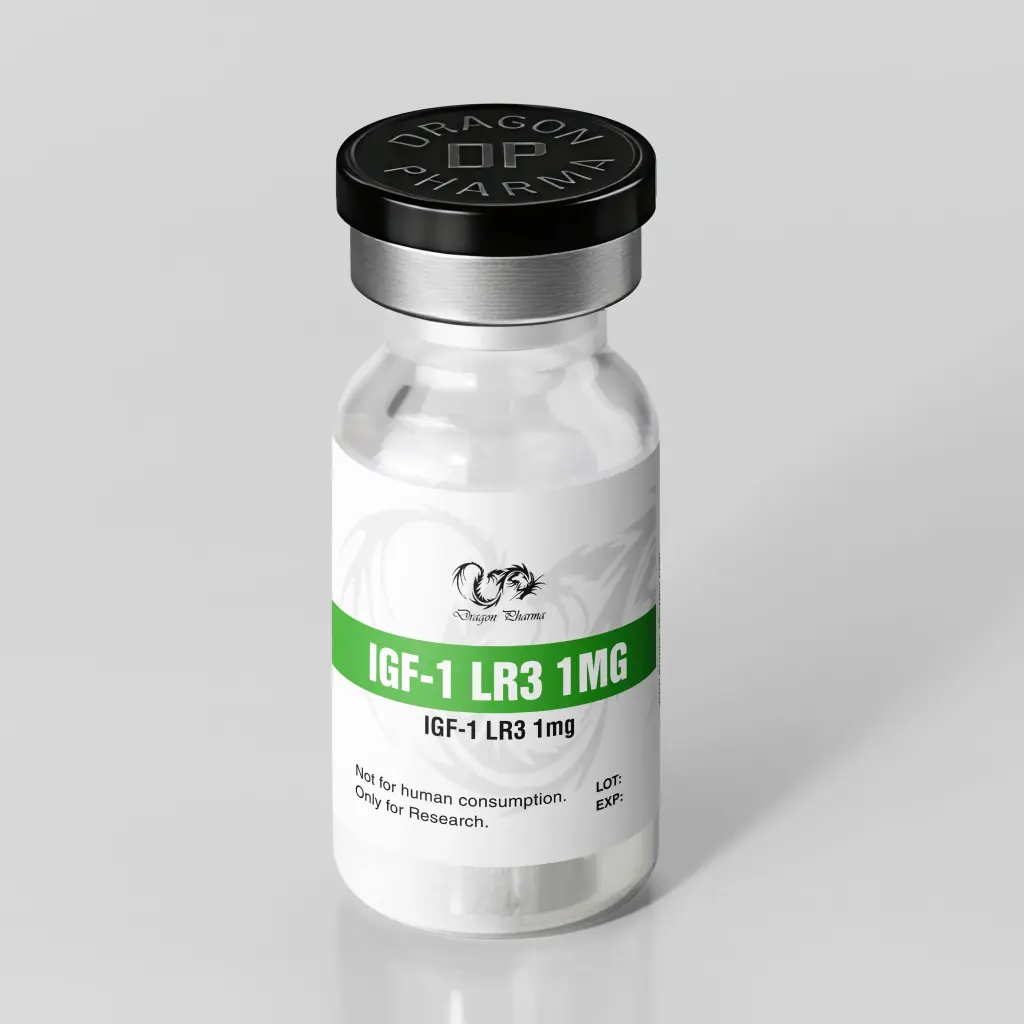
IGF-1 LR3 is a research peptide from Dragon Pharma, Europe, supplied as a 1 mg lyophilized vial. Its active substance is Insulin-like Growth Factor 1 in the Long Arg3 form.
Growth hormone does most of its work through IGF-1. The LR3 version was modified to stay active far longer, which is why it appears at the end of so many growth and recovery studies rather than the middle.
Lab work with this peptide usually covers:
These are research findings only. IGF-1 LR3 is sold for laboratory work, not as a medicine.
IGF-1 LR3 is a protein chain, not a short peptide, so it is easier to damage than most products on this page. Keep the sealed vial cold and dry, away from light, and do not leave it at room temperature. Once mixed, store it in a fridge between 2 and 8 degrees Celsius and use it soon. Never shake the vial at any stage. Add water slowly down the inside wall and let the powder dissolve on its own.
IGF-1 LR3 sits at the end of the growth hormone chain, so it is studied next to the peptides that start it. Sermorelin 5mg by Peptide Hubs and Ipamorelin 5mg by Peptide Hubs both act on GH release, while CJC-1295 No DAC 5mg by Peptide Hubs covers the GHRH side. Everything sits in our HGH & Peptides category.
Is IGF-1 LR3 the same as IGF-1?
No. LR3 is a modified version with a much longer life in the body. The base substance is still Insulin-like Growth Factor 1.
Do I need a prescription?
No. You can buy IGF-1 LR3 without prescription from our shop.
Why is the vial only 1 mg?
IGF-1 LR3 is potent and fragile, so it is supplied in small vials that are easier to store and use.
Add IGF-1 LR3 to your cart to order the Dragon Pharma vial. If you are planning a growth hormone study, compare it with Sermorelin and CJC-1295, or browse the SARMS and Peptides page for the rest of our range.
| Goal | Daily range | How often | Notes |
|---|---|---|---|
| Research ranges | |||
| Muscle growth | 40–100 mcg | Daily, or before and after workouts | Range discussed most often in the literature |
| Recovery and repair | 20–50 mcg | Daily | Lower amount aimed at recovery |
| Maintenance (low dose) | 10–30 mcg | Daily | Minimal-use approach |
| Key facts | |||
| What it is | A modified version of IGF-1 that lasts longer in the body (half-life of about 20–30 hours) | ||
| Usual route | Injection under the skin (subcutaneous) or into the muscle (intramuscular) | ||
| Sports testing | WADA bans IGF-1 and its analogues at all times for tested athletes | ||
| Possible side effects | Low blood sugar, irritation at the injection spot, water retention | ||
| Do not use if | Pregnant, breastfeeding, with a history of cancer, or a tested athlete | ||
| For women | IGF-1 may affect hormone balance and the menstrual cycle; talk to a clinician before use | ||
| Disclaimer | Figures are math conversions only; they do not confirm product quality, safety, or medical suitability | ||
| Reconstitution calculator | |
|---|---|
| Find out how much bacteriostatic water to add and how many units to draw on your syringe for your IGF-1 LR3 dose. | |
| Peptide in the vial |
mg
|
| Bacteriostatic water |
mL
|
| Dose you want |
mcg
|
| Syringe |
|
| Results | |
| Choose your values and press Calculate. | |
| Concentration | — |
| Amount to draw | — |
| Units to draw | — |
| Doses in the vial | — |
| How the math works | |
| 1. Find the concentration | Divide the peptide in the vial by the water added. For example, 1 mg ÷ 1 mL = 1 mg/mL, which is 1,000 mcg/mL |
| 2. Work out the volume | Divide the dose by the concentration. For example, 50 mcg ÷ 1,000 mcg/mL = 0.05 mL |
| 3. Convert to units | On a U-100 syringe, multiply the mL by 100. For example, 0.05 mL = 5 units |
| 4. Check the syringe | Make sure the amount fits the syringe you are using |
| Worked example | |
| Vial | 1 mg IGF-1 LR3 |
| Water | 1 mL bacteriostatic water |
| Dose | 50 mcg |
| Syringe | 100 units (1 mL) |
| Concentration | 1 mg ÷ 1 mL = 1,000 mcg/mL |
| Amount to draw | 50 mcg ÷ 1,000 mcg/mL = 0.05 mL, which is 5 units on a U-100 syringe |
| Disclaimer | |
| This tool does math conversions only. It does not choose a dose for you or confirm product quality, safety, or medical suitability. | |
Mixing a peptide takes about a minute. What people usually get wrong is what happens afterwards. Work through the steps in the guide above, then store the vial the way we lay out further down.
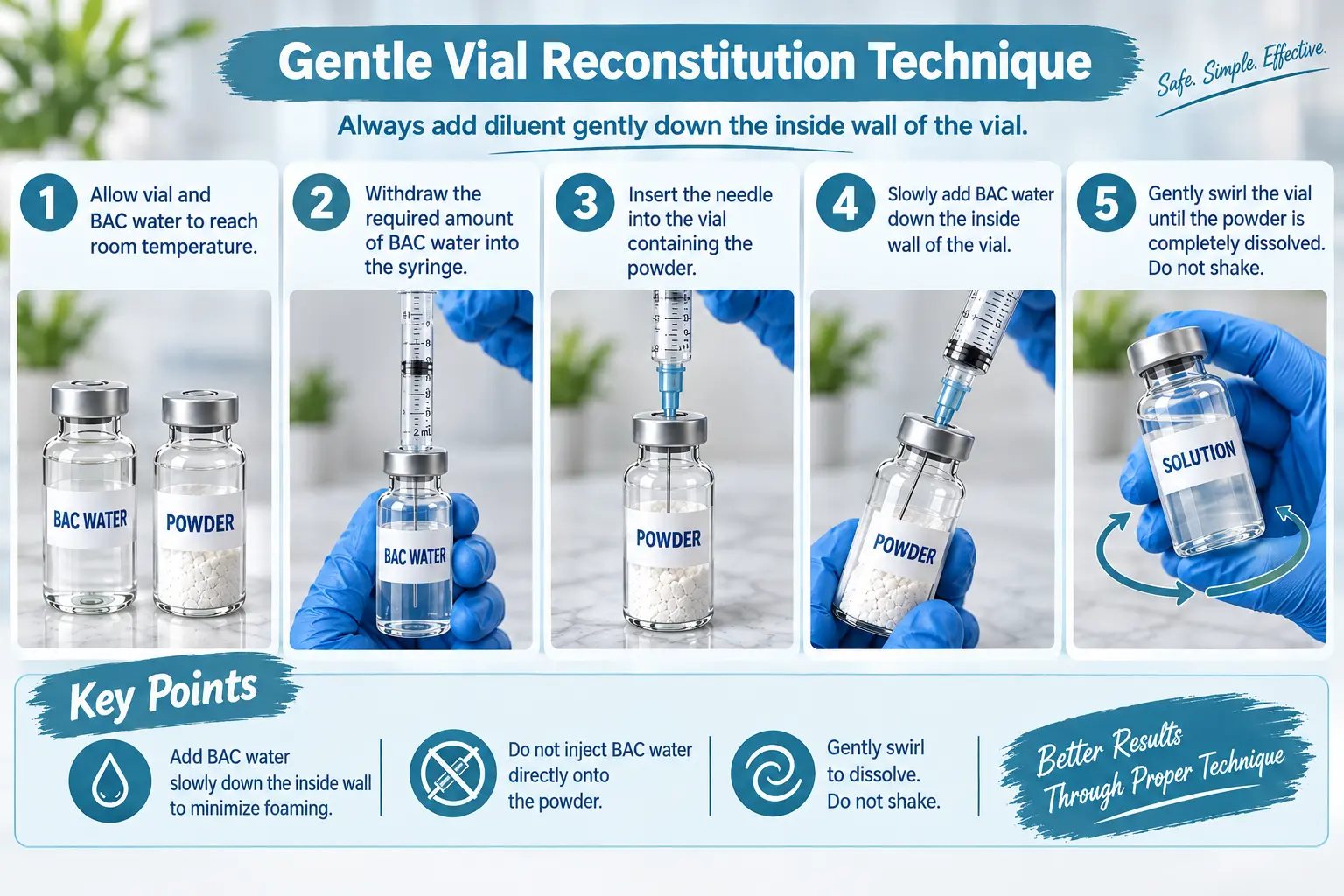
The five steps above cover it. Let the vial and the bacteriostatic water sit out until they reach room temperature. Then run the bacteriostatic water down the inside wall of the vial, slowly, so it does not foam up. Swirl it gently until the powder is gone. Do not shake the vial, and do not squirt the bacteriostatic water straight onto the powder.
As soon as it is mixed, put the vial back in the fridge. 2 to 8°C (35.6°F to 46.4°F) is what you want, and it stays there until you have used it up. Write the mixing date on the label. Do not rely on memory for that.
The dry powder is much easier to keep. Store it dry and away from light, at room temperature if it is only for a short while, or at -20°C for the long term. Only mix what you are going to use.
Please log in to write IGF-1 LR3 review.
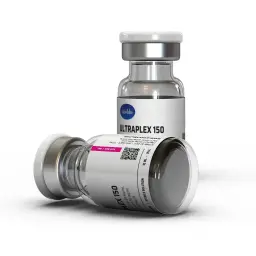
Manufacturer: Axiolabs
Pharmaceutical name: Drostanolone Propionate, Testosterone Propionate, Trenbolone Acetate
Pack: 10 ml vial (150 mg/ml)
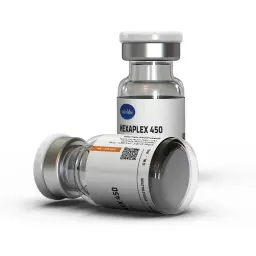
Manufacturer: Axiolabs
Pharmaceutical name: Testosterone Acetate, Testosterone Decanoate, Testosterone Propionate, Testosterone Phenylpropionate, Testosterone Cypionate
Pack: 10 ml vial (450 mg/ml)
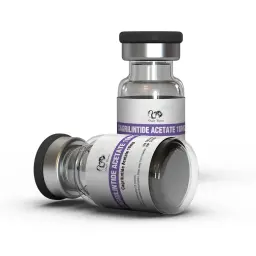
Manufacturer: Dragon Pharma
Substance: Cagrilintide
Pack: vial (10mg)