


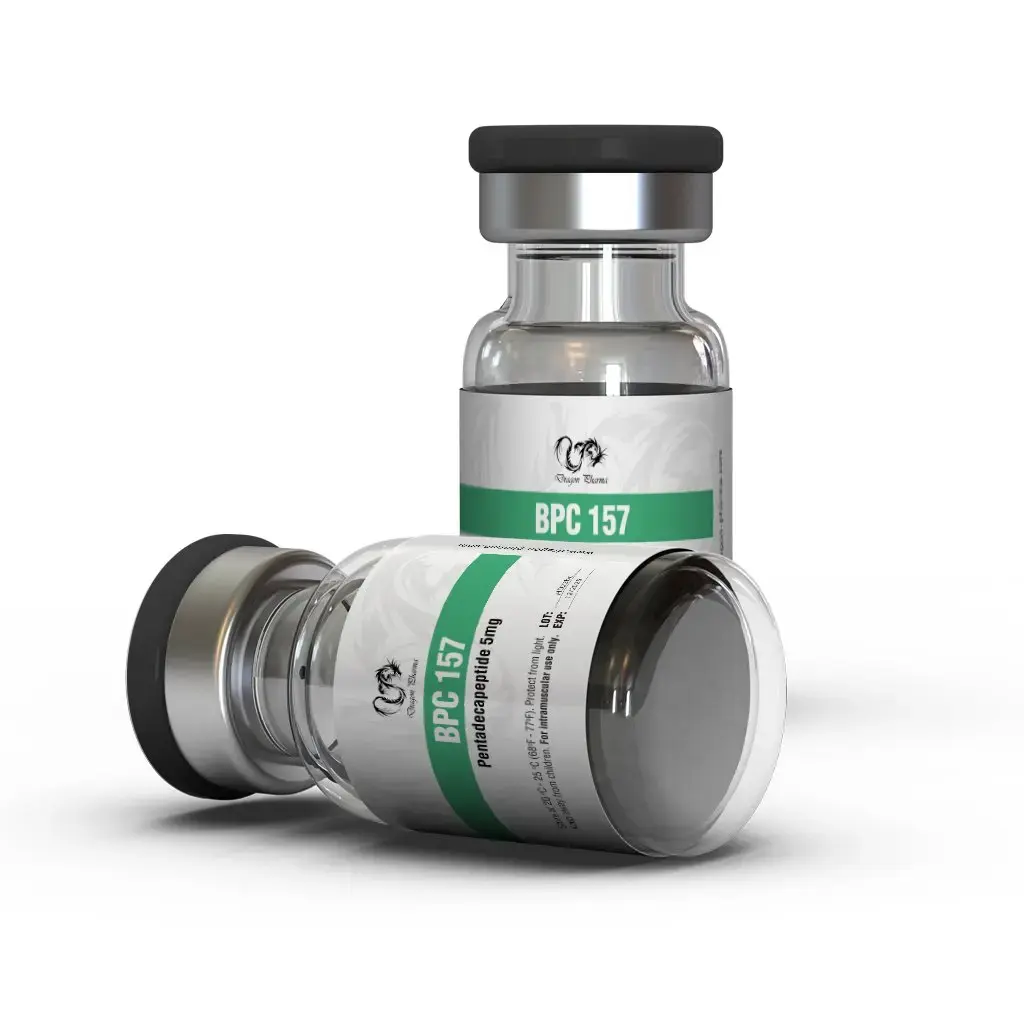
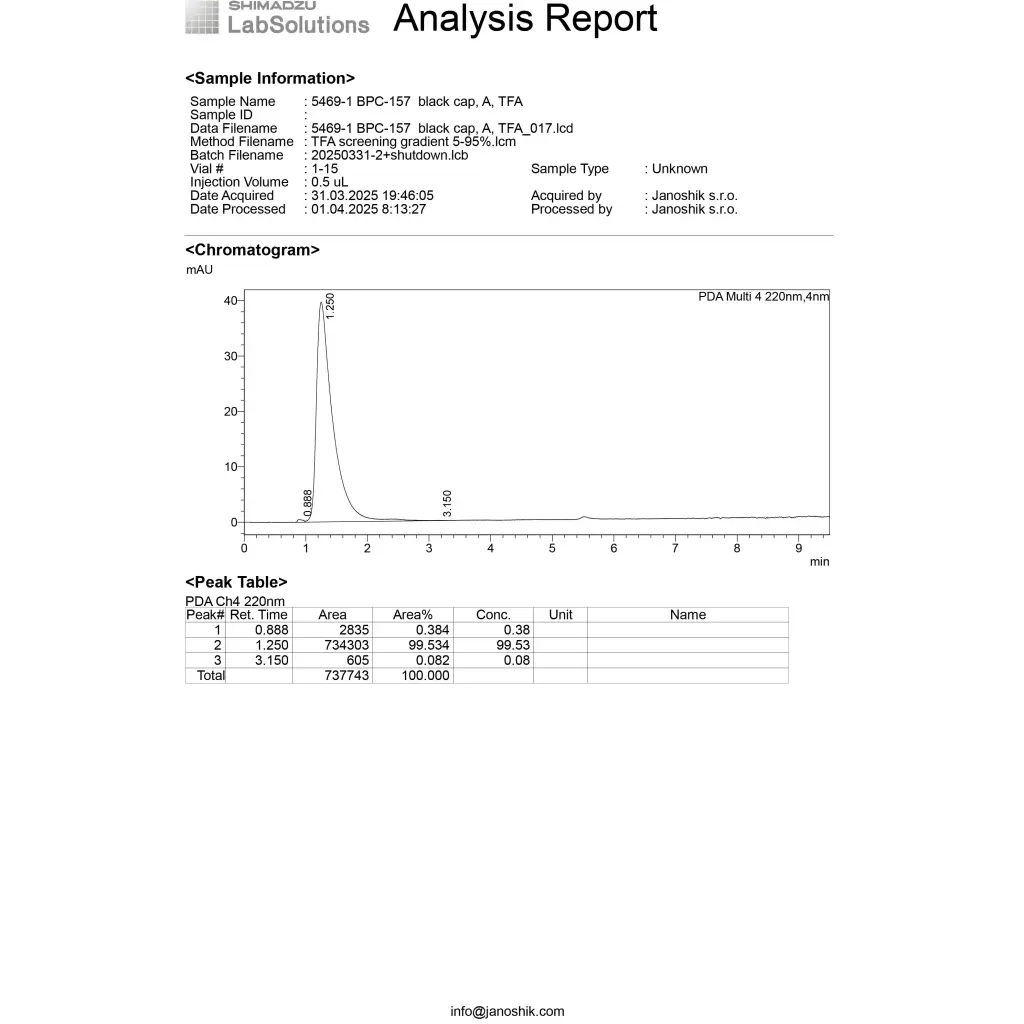
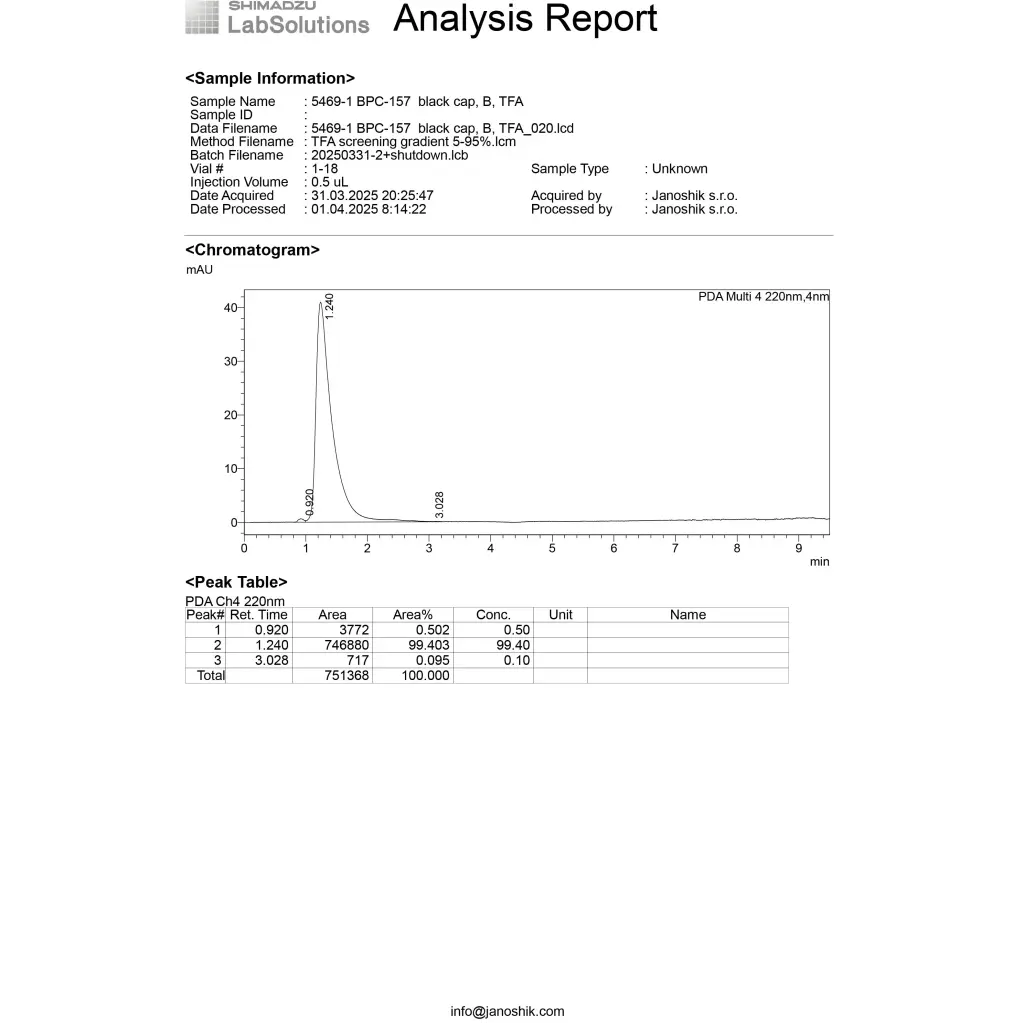
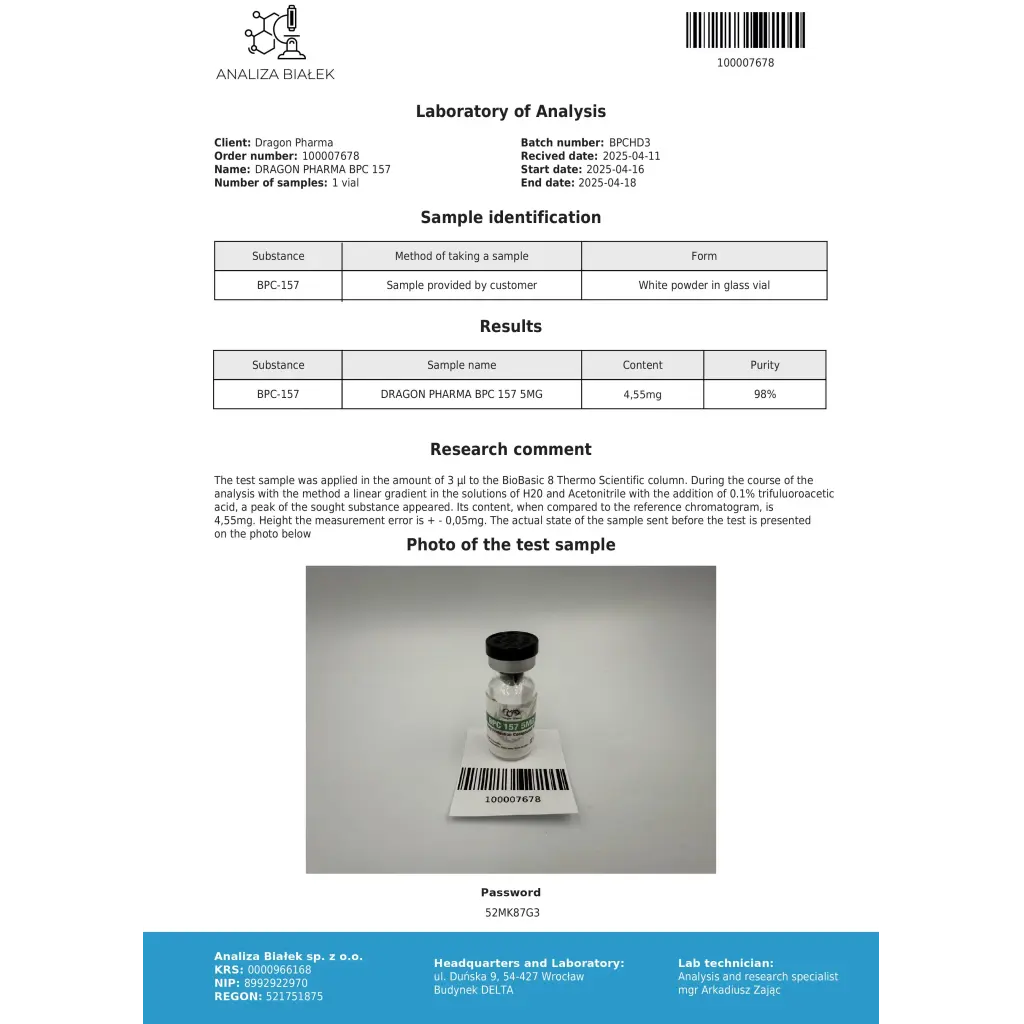
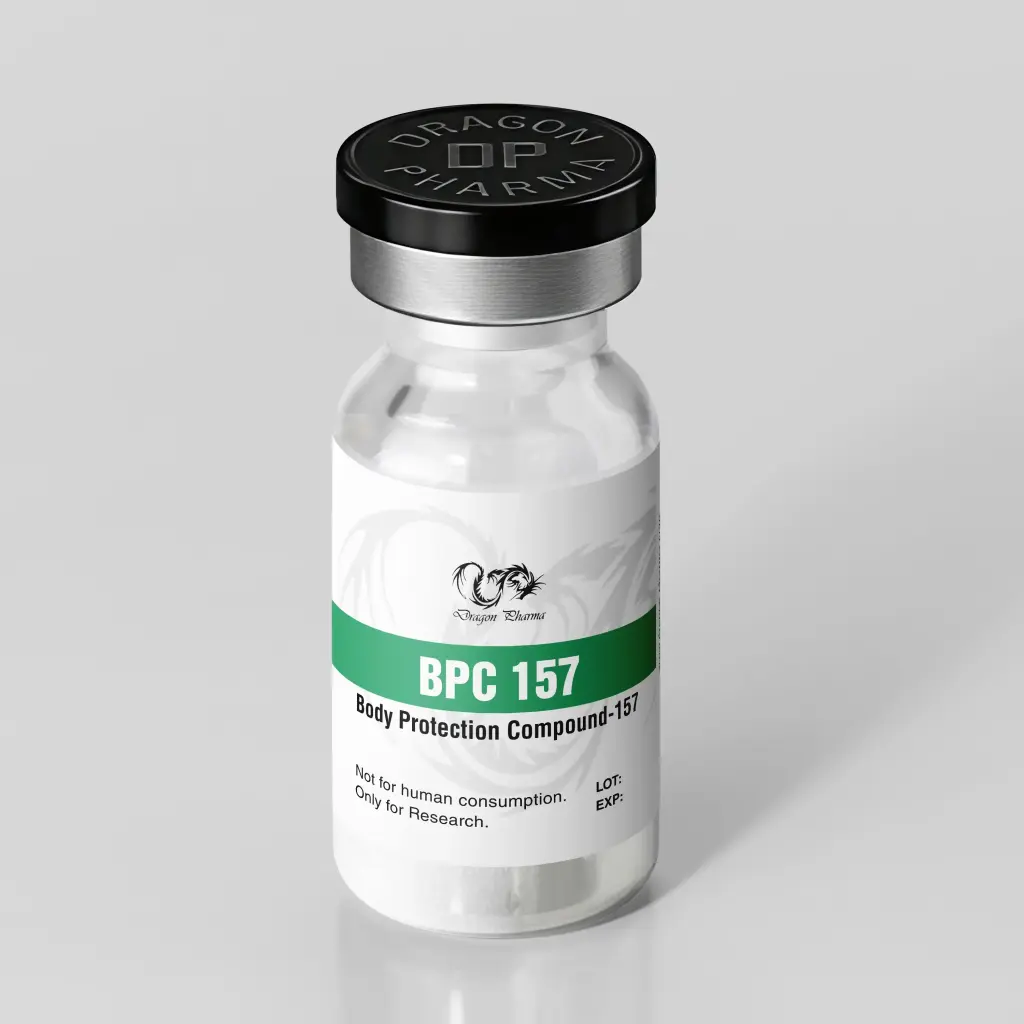
Manufacturer: Dragon Pharma
Pharmaceutical name: Pentadecapeptide
Pack: 2 ml (2 mg)
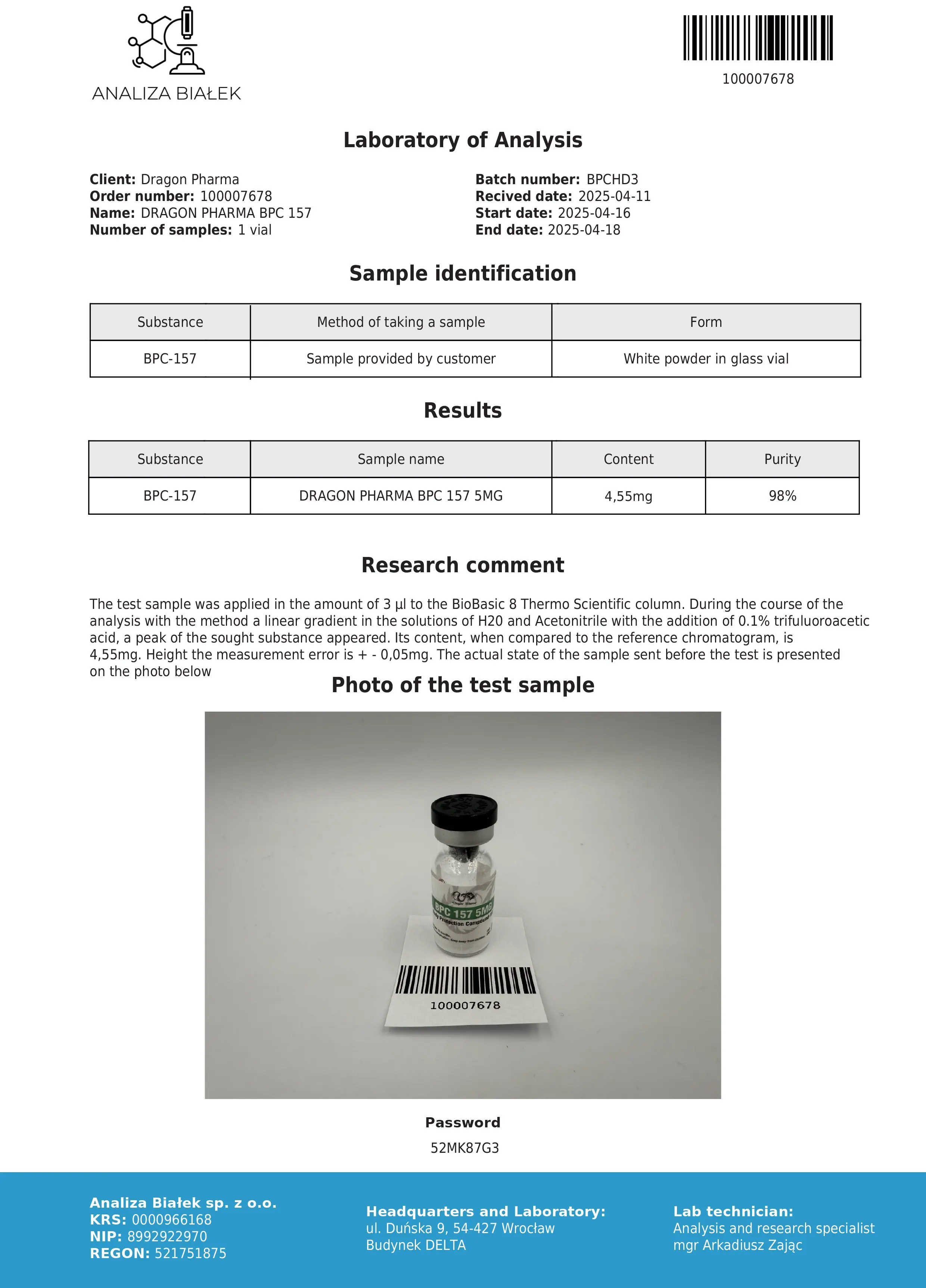
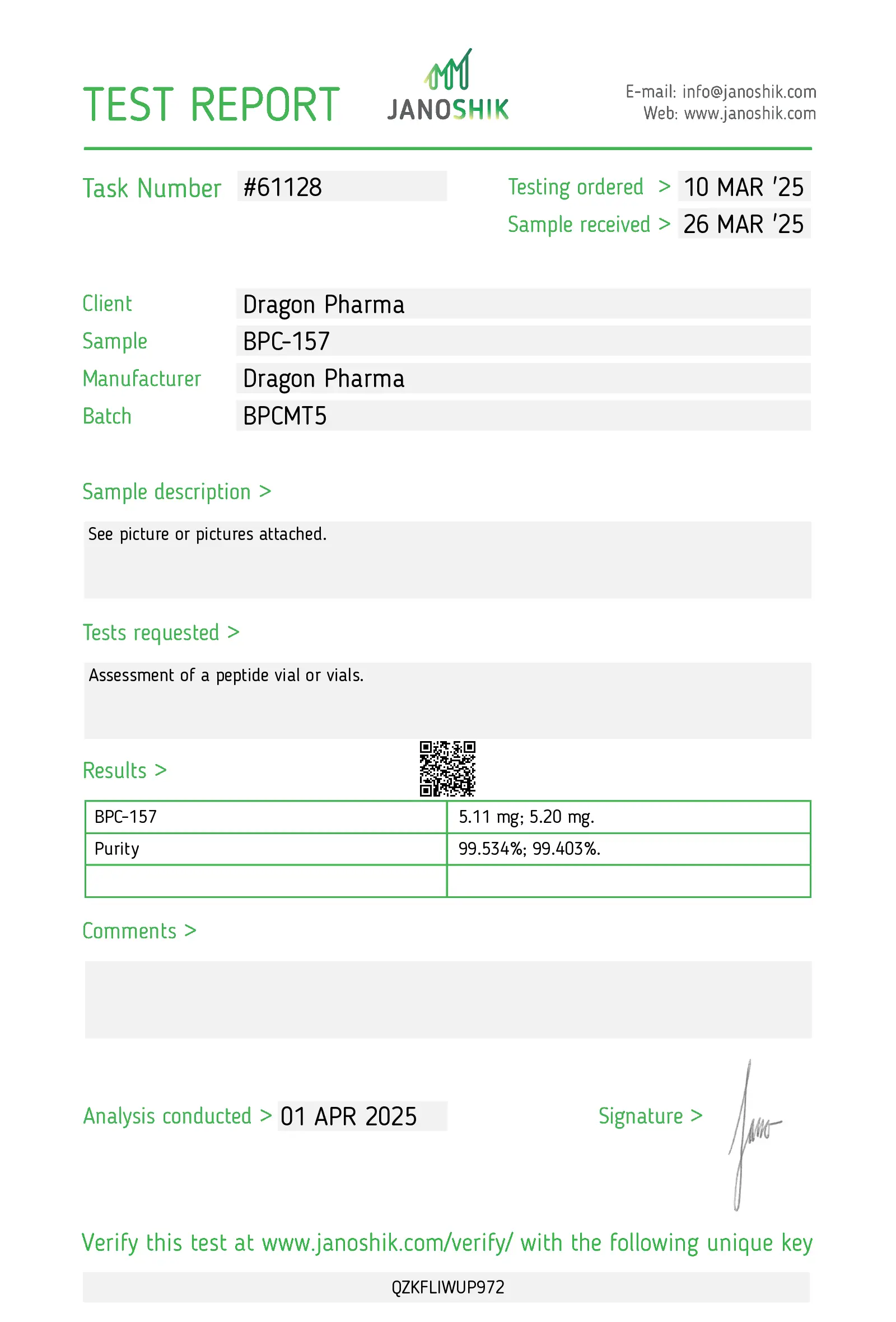
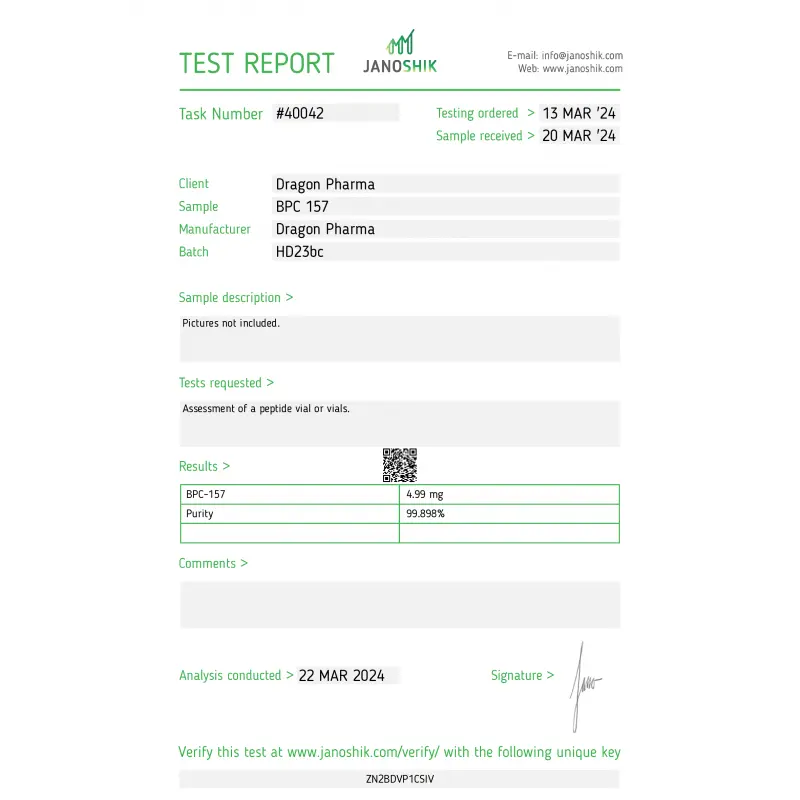
BPC 157 by Dragon Pharma, Europe is a research peptide with Body Protective Compound 157 as its active substance, listed on the vial as Pentadecapeptide. This pack is 2 ml at 2 mg, supplied as lyophilized powder.
BPC 157 is one of the most studied repair peptides. It survives stomach acid, it works on tissue that heals slowly, and it shows up in both local and whole body research. That range is why it stays in demand.
The vial arrives as a dry powder, because a peptide in liquid form breaks down quickly. You add bacteriostatic water before lab work. Draw the water slowly down the inside wall of the vial rather than squirting it onto the powder, then roll the vial gently between your hands. Never shake it, since foam and shear force damage the peptide. A vial mixed this way stays usable for a few weeks in the fridge.
These are research findings only. BPC 157 is sold for laboratory work, not as a medicine.
Keep the sealed vial in a cool, dark and dry place. Once mixed, keep it in a fridge between 2 and 8 degrees Celsius and use it within a few weeks. Keep the powder dry until you are ready, and use clean tools every time.
Repair studies rarely run one peptide alone. TB 500 by Peptide Hubs is the standard partner, and if you want both in one order, the TB 500 and BPC 157 Peptide Stack by Peptide Hubs covers it. Some labs add GHK-Cu 50mg by Dragon Pharma for collagen work. For another maker of the same peptide, see BPC 157 by Peptide Hubs. You can find the rest in our HGH & Peptides category.
Why is the pack listed as 2 ml and 2 mg?
The first figure is the volume of the vial, the second is how much peptide it holds. Both appear on the label.
Do I need a prescription?
No. You can buy BPC 157 without prescription from our shop.
Can I mix it with plain water?
You can, but a mixed vial then only keeps for a day or two. Bacteriostatic water keeps it usable for weeks.
Add BPC 157 to your cart to order the Dragon Pharma vial. Order your bacteriostatic water in the same go so you can mix as soon as it lands, or browse the SARMS and Peptides category for the rest of our repair peptides.
| Level | Dose size | Description |
|---|---|---|
| Dosage levels | ||
| Low | 100 mcg | Conservative entry point |
| Moderate | 250 mcg | Typical amount in research settings |
| High | 500 mcg | Upper limit of the commonly cited range |
| Essential information | ||
| Regulatory status | Sold as a research compound; no human dose has FDA approval | |
| Half-life | Undetermined; estimates differ across sources | |
| Administration | Subcutaneous injection, just beneath the skin | |
| Dosing frequency | One to two times daily | |
| Maximum researched dose | 500 mcg | |
| Reported side effects | Injection-site reactions, nausea, stomach discomfort | |
| Please note | Values are unit conversions provided for reference, not medical guidance | |
| Reconstitution calculator | |
|---|---|
| Find out how much bacteriostatic water to add and how many units to draw on your syringe for your BPC-157 dose. | |
| Peptide in the vial |
mg
|
| Bacteriostatic water |
mL
|
| Dose you want |
mcg
|
| Syringe |
|
| Results | |
| Choose your values and press Calculate. | |
| Concentration | — |
| Amount to draw | — |
| Units to draw | — |
| Doses in the vial | — |
| How the math works | |
| 1. Find the concentration | Divide the peptide in the vial by the water added. For example, 5 mg ÷ 2 mL = 2.5 mg/mL, which is 2,500 mcg/mL |
| 2. Work out the volume | Divide the dose by the concentration. For example, 100 mcg ÷ 2,500 mcg/mL = 0.04 mL |
| 3. Convert to units | On a U-100 syringe, multiply the mL by 100. For example, 0.04 mL = 4 units |
| 4. Check the syringe | Make sure the amount fits the syringe you are using |
| Worked example | |
| Vial | 5 mg BPC-157 |
| Water | 2 mL bacteriostatic water |
| Dose | 100 mcg |
| Syringe | 100 units (1 mL) |
| Concentration | 5 mg ÷ 2 mL = 2,500 mcg/mL |
| Amount to draw | 100 mcg ÷ 2,500 mcg/mL = 0.04 mL, which is 4 units on a U-100 syringe |
| Disclaimer | |
| This tool does math conversions only. It does not choose a dose for you or confirm product quality, safety, or medical suitability. | |
Mixing a peptide takes about a minute. What people usually get wrong is what happens afterwards. Work through the steps in the guide above, then store the vial the way we lay out further down.
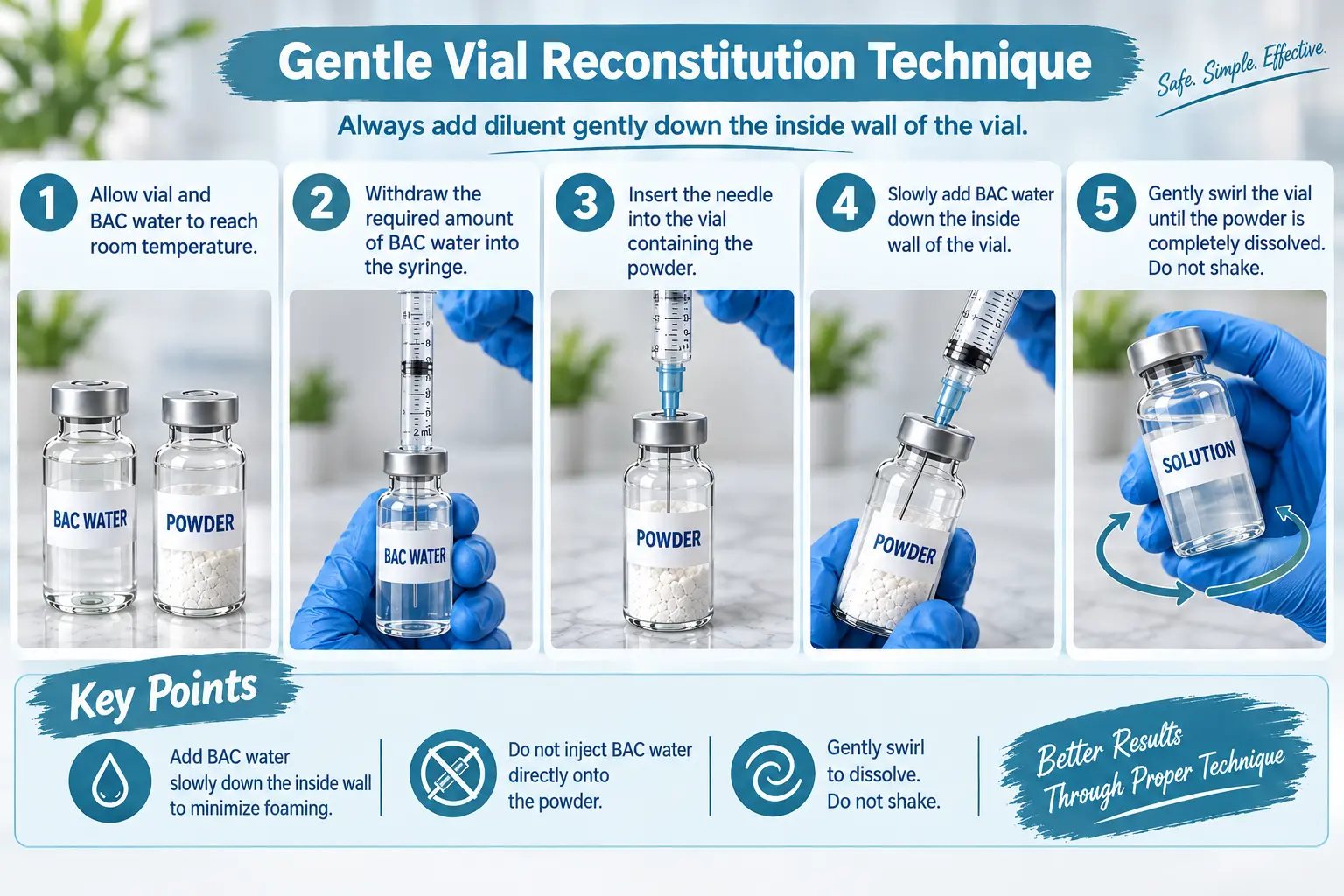
The five steps above cover it. Let the vial and the bacteriostatic water sit out until they reach room temperature. Then run the bacteriostatic water down the inside wall of the vial, slowly, so it does not foam up. Swirl it gently until the powder is gone. Do not shake the vial, and do not squirt the bacteriostatic water straight onto the powder.
As soon as it is mixed, put the vial back in the fridge. 2 to 8°C (35.6°F to 46.4°F) is what you want, and it stays there until you have used it up. Write the mixing date on the label. Do not rely on memory for that.
The dry powder is much easier to keep. Store it dry and away from light, at room temperature if it is only for a short while, or at -20°C for the long term. Only mix what you are going to use.
Please log in to write BPC 157 review.
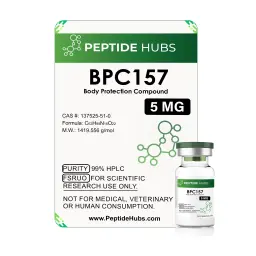
Manufacturer: Peptide Hubs
Pharmaceutical name: Body Protective Compound 157
Pack: vial (5 mg)
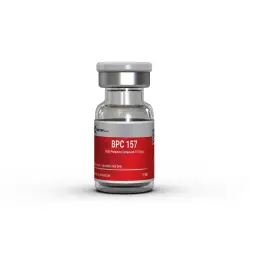
Manufacturer: British Dragon Pharmaceuticals
Pharmaceutical name: Pentadecapeptide
Pack: vial (5 mg)
⚠️ Provided in a lyophilized powder for stability
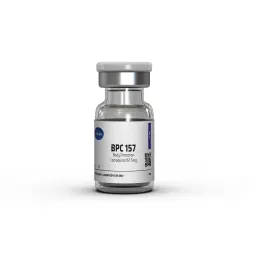
Manufacturer: Axiolabs
Pharmaceutical name: Pentadecapeptide
Pack: vial (5 mg)
⚠️ Provided in a lyophilized powder for stability
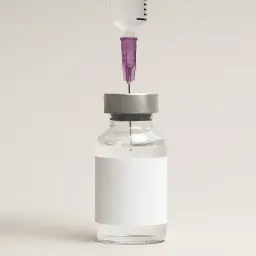
Manufacturer: Stealth Labs
Pharmaceutical name: Pentadecapeptide
Pack: vial (10mg per vial)
STEALTH - Shipped without label
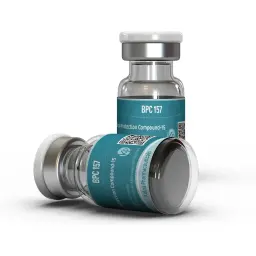
Manufacturer: Kalpa Pharmaceuticals
Pharmaceutical name: Pentadecapeptide
Pack: vial (2mg per vial)
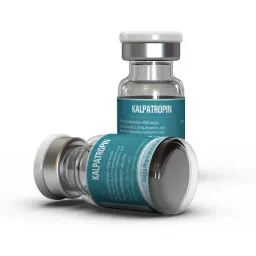
Manufacturer: Kalpa Pharmaceuticals LTD, India
Substance: Human Growth Hormone ( Somatropin [rDNA origin] )
Pack: 1 kit (10 vials 20 iu/vial)
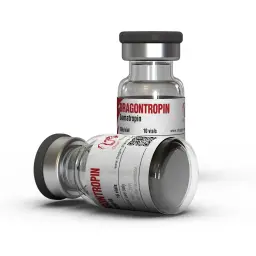
Manufacturer: Dragon Pharma
Pharmaceutical name: Human Growth Hormone
Pack: 1 kit (10 vials 10 iu/vial)
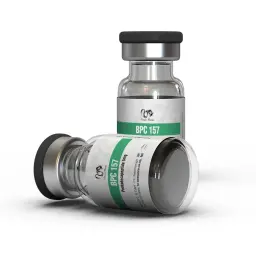
Manufacturer: Dragon Pharma
Pharmaceutical name: Pentadecapeptide
Pack: 2 ml (2 mg)